In 2026, the global demand for biophilic design in commercial spaces—hotels, offices, and retail hubs—has pivoted from "budget-friendly" to "ultra-realistic." For overseas B2B procurement managers, the challenge isn't just finding a supplier; it’s finding a partner who understands the intersection of aesthetics, safety compliance, and long-term durability.
One of the primary frustrations for B2B buyers is the "conspicuously artificial" look. Low-end products often feature shiny, uniform leaves that ruin a brand’s interior ambiance.
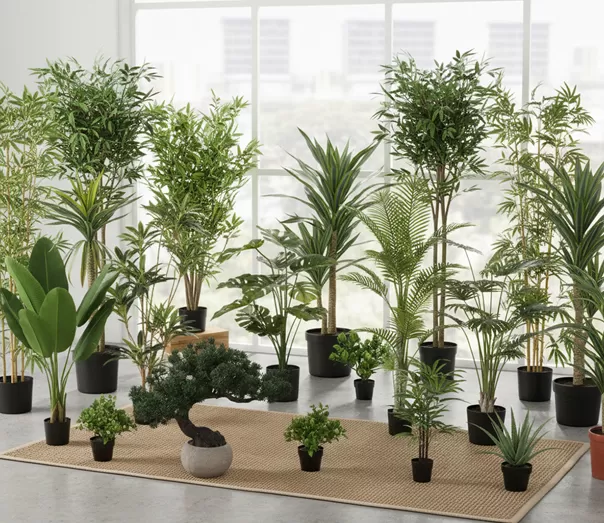
The Solution: Top-tier manufacturers now utilize Real-touch PE (Polyethylene) materials and advanced 3D scanning to replicate the biological texture of live plants. By incorporating natural imperfections—such as subtle color gradients and varied leaf sizes—these artificial plants, like the large-scale Fiddle Leaf Figs and Bamboo seen in modern showrooms, offer an authentic visual experience without the maintenance. This realistic aesthetic also extends to complementary items like planters for plants for sale, which can be selected to enhance the overall presentation.
For commercial installations, non-compliance is not an option. Many B2B buyers worry about the liability of installing flammable synthetic decor in public spaces, making this a critical consideration when sourcing from home accent wholesale suppliers.
The Solution: Leading suppliers provide Inherent Fire Retardant (IFR) foliage. Unlike topical sprays that wash off over time, IFR technology fuses fire-resistant chemicals directly into the raw material. When sourcing, always request certification for:
1. NFPA 701 (USA)
2. BS 5722 (UK)
3. ASTM E84 Class A
Nothing hurts a buyer’s ROI more than a lush green wall turning blue or brittle within six months of sun exposure.
The Solution: Look for UV-stabilized polymers. High-end outdoor collections from reliable home decoration factory are engineered with UV inhibitors tested for 1,000+ hours of Xenon arc exposure. This ensures the greenery maintains its vibrant hue for 3-5 years, even in high-UV regions like Australia or the Middle East.
Shipping "air" is the bane of the artificial plant industry. Large artificial trees often incur astronomical freight costs due to their volume.
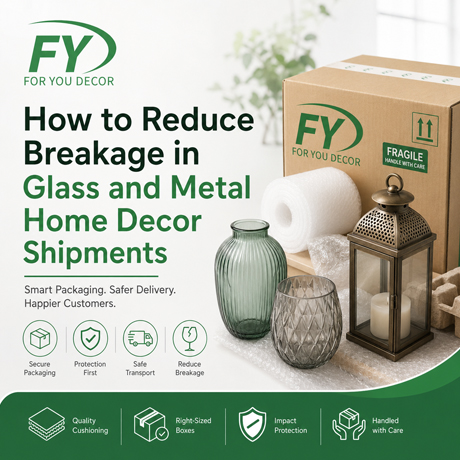
The Solution: Smart suppliers employ KD (Knock-Down) design. By engineering branches that can be easily detached and reassembled without visible joints, suppliers can reduce carton volume by up to 40%. This not only lowers shipping costs but also minimizes the risk of transit damage through reinforced internal packaging.



 English
 français
 Deutsch
 italiano
 русский
 العربية
 Türkçe
 čeština
 dansk
dansk Suomi
Suomi Polska
 magyar
 Svenska
 norsk
norsk română
 slovenský