As home and garden trends continue to evolve in 2026, one product category is quietly becoming a favorite across interiors, patios, balconies, and seasonal displays: textured cement planters. With their soft earthy tones, sculptural shapes, and natural handmade character, cement flower pots are no longer seen as simple containers. They have become part of the styling story.
From warm minimalist living rooms to small-space balcony gardens, today’s buyers are looking for decor that feels calm, grounded, and versatile. That is exactly why textured cement planters are gaining attention. They work beautifully with dried flowers, fresh greenery, faux stems, succulents, herbs, and even standalone tabletop styling. More importantly, they fit the broader shift toward natural materials, quiet luxury, and practical beauty.
One of the biggest style directions for 2026 is warm minimalism. Instead of cold white spaces and sharp modern lines, homeowners are choosing interiors that feel softer, warmer, and more lived-in. Neutral shades such as ivory, sand, beige, clay, soft blush, and warm white are being layered with wood, linen, stone, and tactile accessories.
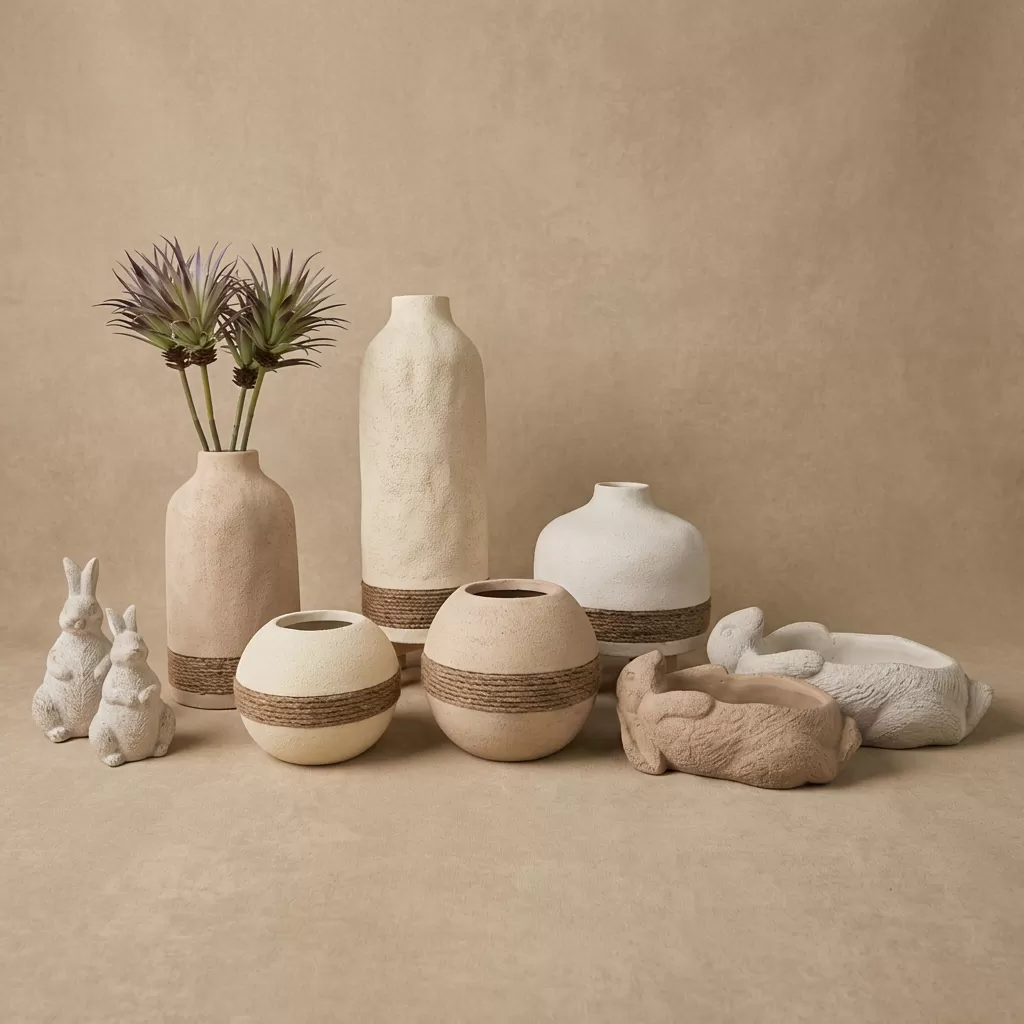
This is where textured cement planters stand out. Their matte finish and subtle surface texture bring depth to a room without making it feel busy. A rounded cement vase on a console table, a small decorative planter on open shelving, or a softly colored flower pot on a dining table can instantly add warmth to a neutral interior. These pieces are simple, but they never feel flat.
For buyers who want decor that blends into Nordic, rustic, Japandi, Mediterranean, or organic modern interiors, concrete flower pots and cement vases offer a timeless solution.
Another key reason this category is growing is the rise of micro gardening and small-space styling. Many consumers today live in apartments, townhomes, or compact urban homes where every surface matters. Balconies, windowsills, kitchen corners, entry tables, and floating shelves are all becoming mini styling zones.
Textured cement planters are ideal for these spaces because they combine function and decoration in one item. A small planter can hold herbs in the kitchen, succulents on a desk, or seasonal florals in a living room corner. A sculptural cement vase can also act as a decorative object even when not filled with plants.
For retailers, this creates more selling opportunities. A single planter collection can be positioned for indoor greenery, table decor, shelf styling, balcony garden ideas, spring displays, and giftable home accents. That flexibility makes cement flower pots especially attractive for lifestyle stores, home decor brands, and garden-focused collections.
In 2026, outdoor styling is becoming more relaxed and more intentional. Instead of overcrowded patios and over-decorated gardens, many homeowners are creating outdoor spaces that feel peaceful, clean, and easy to maintain. The mood is less “showy” and more “sanctuary.”
Textured cement planters fit this movement naturally. Their grounded tones work well with stone, wood, gravel, rattan, and soft outdoor fabrics. They can be used to soften a patio corner, frame an entryway, style a garden bench, or create a clean tabletop arrangement outdoors. Because the visual language is neutral and natural, these planters help outdoor spaces feel calm rather than cluttered.
For spring and summer merchandising, neutral cement pots also pair beautifully with olive branches, lavender, eucalyptus, rosemary, wildflowers, and ornamental grasses. The look feels elevated, seasonal, and easy to recreate.
Consumers are also paying more attention to how their homes and gardens feel in relation to nature. Products that look artificial, overly glossy, or trend-driven are losing some appeal. In their place, buyers are choosing pieces that feel grounded, durable, and closer to the natural world.
That is why decorative cement planters have strong visual value in sustainable styling stories. Even before discussing materials in detail, their appearance already communicates permanence, simplicity, and everyday usefulness. They feel like products meant to stay in the home, not disappear after one season.
For content marketing, this creates a strong angle. Instead of describing the item as only a flower pot, brands can position it as part of a slower, more thoughtful home and garden lifestyle. Keywords such as natural home decor, calm garden styling, neutral planter decor, and sustainable seasonal decorating all fit naturally into this topic.
Another important opportunity is seasonal merchandising. In the past, spring decor often relied on bright colors and obvious floral themes. Today, many buyers prefer softer storytelling. They still want a spring refresh, but they want it to feel elegant, subtle, and long-lasting.
This is why neutral cement planters work so well in spring collections. When paired with rabbit-shaped accents, sculptural vases, small table pots, and delicate branches or flowers, they create a gentle seasonal mood without looking overly themed. The result is perfect for spring table styling, Easter home decor, gift collections, and boutique displays.
A rabbit planter or rabbit-shaped cement pot, for example, gives a collection a seasonal identity while still blending with modern interiors. That balance is valuable for retailers who want holiday relevance without sacrificing everyday usability.


 English
 français
 Deutsch
 italiano
 русский
 العربية
 Türkçe
 čeština
 dansk
dansk Suomi
Suomi Polska
 magyar
 Svenska
 norsk
norsk română
 slovenský