For home décor wholesalers, furniture retailers, contractors, hotel renovation teams, apartment developers, and interior project buyers, a wall shelf is more than a decorative storage product — it is a load-bearing installation system that must be safe under the weight it will carry, efficient to mount across multiple rooms or units, visually consistent across batch orders, and easy to maintain after delivery without generating the after-sales service calls, contractor rework requests, and customer complaints that a poorly designed shelf creates when it tilts, sags, loosens, or fails after installation. In B2B procurement, the biggest concerns are not only style and price — they are material strength, bracket stability, installation hardware quality, packaging protection, and the after-sales risk that accumulates when any one of these elements fails to perform as expected in the field.
For buyers sourcing wall shelf China products, the performance difference between a commercial-grade shelf with a strong board material, reliable hidden bracket system, correct wall anchors, complete hardware pack, and clear installation instructions and a basic decorative shelf that looks identical in catalog photos but fails under real-world load conditions is not visible at the point of purchase — it becomes visible weeks or months after installation, when the shelf tilts under the weight of books or kitchen items, when the bracket loosens from a drywall anchor that was not specified for the load, or when a contractor discovers that the hardware pack is missing the anchors needed for the wall type on the project. For You Decor offers wall shelves designed for display, organization, space-saving storage, and easy installation with necessary mounting hardware and clear setup instructions — providing the installation reliability and commercial-grade quality that B2B procurement requires.
This guide covers the complete picture for wall shelf procurement managers, contractors, and wholesale buyers: why load capacity and installation safety are the most important evaluation criteria, what makes a commercial-grade wall shelf different from a basic display board, how material, brackets, and anchors work together to carry the load, how to evaluate wall shelf components for installation efficiency and long-term reliability, and what procurement and maintenance practices protect buyers and end users through the shelf's service life.
The risk management case for rigorous load capacity and installation system evaluation starts with a clear understanding of the specific failure mechanisms that poorly designed wall shelves create — and why these failures have commercial consequences that far exceed the cost difference between a basic and a commercial-grade shelf.
Post-installation shelf failure creating property damage and liability is the most commercially damaging consequence of inadequate load capacity evaluation — because a shelf that tilts, loosens, or falls after installation does not simply create a product return. It creates property damage claims, contractor rework costs, customer complaints that damage the buyer's brand reputation, and in severe cases, liability exposure from items falling and causing injury. For hotel renovation teams and apartment developers who install hundreds of shelves across a project, a systematic failure in shelf design or hardware specification creates a rework cost that can exceed the original procurement saving many times over.
Missing or mismatched hardware creating installation delays is the operational efficiency problem that most directly affects contractor productivity and project schedule performance. When a shelf arrives without the correct wall anchors for the installation surface, with screws that are too short for the bracket design, or without the installation template that allows accurate hole positioning, the contractor must stop work, source the missing components, and return to complete the installation — creating labor cost overruns that accumulate across every affected unit in the project.
Inconsistent batch quality creating visual and structural variation is the quality control problem that most directly affects the buyer's ability to deliver a consistent result across multi-room or multi-unit projects. For hotel renovation teams and apartment developers who need every shelf in every room to look identical and perform identically, batch color variation, inconsistent hole positioning, and variable bracket quality create the visual and structural inconsistencies that generate client complaints and require selective replacement.

Understanding what a wall shelf is — and how its board material, bracket system, wall anchor specification, hardware pack, and installation instructions work together as a complete load-bearing installation system — is essential for procurement managers evaluating wall shelf specifications for commercial applications.
A wall shelf is a wall-mounted storage and display unit used to hold decorative objects, books, kitchen items, bathroom essentials, retail products, plants, picture frames, or hotel amenities — helping maximize vertical wall space while keeping items organized and accessible. For You Decor positions its wall shelves as stylish products for displaying décor, organizing essentials, adding functional elegance, and freeing up floor space in small rooms — with designs that come with necessary hardware and clear instructions for quick mounting.
A decorative wall shelf becomes a commercial-grade product only when it combines appearance, load capacity, installation reliability, packaging protection, and repeatable supply quality — because any one of these elements failing creates the after-sales risk that B2B buyers cannot afford across large-scale procurement programs.
| Requirement | Why It Matters for B2B Buyers |
|---|---|
| Clear load-bearing reference | Allows buyers to match shelf specification to intended use |
| Reliable bracket or mounting system | Determines long-term installation stability |
| Stable board material | Prevents sagging and surface deformation under load |
| Consistent finish across batches | Critical for multi-room and multi-unit projects |
| Complete hardware package | Eliminates installation delays from missing components |
| Export-ready packaging | Prevents board damage and corner breakage during shipping |
| Easy installation guide | Reduces installation mistakes and after-sales calls |
The technical mechanism by which shelf board material, hidden bracket design, screw specification, and wall anchor selection work together to create the load-bearing capacity that a wall shelf must deliver — and why each element of this system must be evaluated together rather than independently — is the core engineering knowledge that procurement managers and contractors need to specify the right wall shelf for each application.
A wall shelf carries weight through three interconnected structural points: the shelf board that resists bending and surface deformation under the distributed load of items placed on it, the bracket system that transfers the shelf load to the wall connection points, and the wall anchor and screw connection that locks the bracket into the wall material and transfers the load to the wall structure. If any one of these three points fails — the board sags, the bracket bends, or the anchor pulls out — the entire system fails, regardless of how well the other two points are designed.
| Material Type | Load Strength | Best Application | Key Limitation |
|---|---|---|---|
| Solid wood | Strong natural grain, excellent screw-holding power | Heavy-duty shelves, premium décor, hotels, retail | Higher cost, humidity sensitivity |
| Plywood | Stable layered structure, good strength-to-weight ratio | Mid-to-heavy display shelves, project use | Edge finishing must be controlled |
| MDF | Smooth surface, good for painting, cost-effective | Decorative shelves, light-to-medium storage | Lower screw-holding strength, moisture-sensitive |
| Particle board | Economical and lightweight | Budget décor and light display | Lower durability under heavy load |
For buyers searching for the best floating shelves for heavy items, the correct specification requires strong board material — solid wood or thick plywood — combined with heavy-duty hidden brackets with adequate rod diameter and length, correct wall anchors matched to the specific wall substrate, and pre-drilled holes that ensure accurate bracket alignment during installation.
Hidden brackets are widely used in floating wall shelves because they create the clean, minimalist look that modern and contemporary interior design requires — but their stability depends on bracket steel thickness, rod diameter, rod length relative to shelf depth, screw quality, wall anchor type, board density at the bracket insertion points, hole alignment accuracy, and the wall substrate condition at the installation location. A hidden bracket system that is correctly specified for the shelf depth, board material, and wall type delivers excellent load performance — but a system where any one of these variables is incorrectly specified creates the installation failures that generate after-sales problems.
The systematic evaluation of wall shelf components — board material, hidden brackets, screws, wall anchors, pre-drilled holes, surface finish, and accessory pack — against the requirements of the specific installation application is the technical procurement knowledge that ensures the selected shelf delivers the load performance, installation efficiency, and long-term reliability that commercial projects require.
| Component | What to Evaluate | Installation and Safety Impact |
|---|---|---|
| Shelf board | Material, thickness, density, finish quality | Determines load capacity and visual consistency |
| Hidden bracket | Steel thickness, rod diameter, welding quality | Determines floating shelf stability under load |
| Screws | Length, diameter, coating, hardness | Prevents loosening and bracket failure |
| Wall anchors | Match to concrete, brick, drywall, or studs | Critical for safe installation on different wall types |
| Pre-drilled holes | Accuracy and alignment consistency | Speeds up contractor installation across multiple units |
| Surface finish | Paint, veneer, laminate, stain, coating quality | Affects décor style and batch color consistency |
| Edge treatment | Smoothness, sealing, corner protection | Reduces shipping damage and improves appearance |
| Accessory pack | Complete hardware kit with labeled components | Eliminates missing-part delays and installation errors |
For You Decor emphasizes that its wall shelves are designed for hassle-free setup and come with necessary hardware and clear instructions for quick mounting — directly supporting contractor efficiency and reduced after-sales risk across hotel, apartment, and retail installation projects.
For contractors installing wall shelves across multi-room or multi-unit projects, the accessory pack quality determines the installation efficiency of the entire project:
Missing or mismatched hardware creates: delayed installation while sourcing replacement components, extra store runs for anchors or screws, inconsistent mounting quality across units, higher labor cost per unit, more after-sales service calls, and customer dissatisfaction that affects repeat business.
A complete, correctly specified accessory pack provides: hidden brackets matched to the shelf depth and board material, screws of the correct length and diameter for the bracket design, wall anchors matched to the most common wall types in the target market, a clear installation instruction sheet with diagrams, a mounting template for accurate hole positioning, and labeled component bags that allow warehouse checking and prevent small parts from being lost during installation.
| Evaluation Factor | Wall Shelf | Freestanding Shelf |
|---|---|---|
| Space efficiency | Saves floor space, uses vertical wall area | Requires floor area |
| Installation requirement | Needs wall mounting with correct anchors | Usually no wall drilling |
| Visual effect | Clean floating look, premium appearance | Larger furniture presence |
| Load capacity | Depends on brackets, board, and wall type | Depends on frame structure |
| B2B procurement concern | Installation safety and hardware completeness | Shipping size and assembly complexity |
| Best application | Décor, small storage, vertical display in hotels and apartments | Larger storage and movable display |
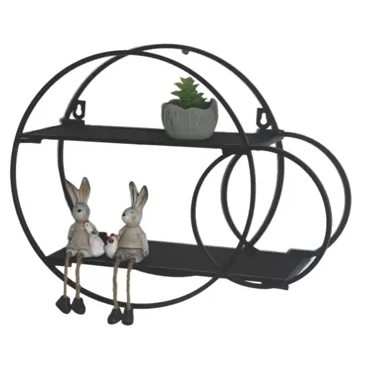
Procuring the right wall shelves for a specific commercial application requires systematic pre-order confirmation of material specifications, load requirements, bracket design, hardware pack completeness, and packaging protection — and maintenance guidance that protects the shelf's structural integrity and appearance through its service life.
Before requesting a quotation for wall shelves, prepare and confirm the following:
Confirm the intended use — decorative display, light storage, or heavy storage — and verify that the selected board material and bracket specification provide adequate load capacity for the heaviest items that will be placed on the shelf
Confirm the wall type at the installation location — concrete, brick, drywall, or wood stud — and verify that the included wall anchors are correctly specified for that wall type
Confirm the shelf depth and verify that the hidden bracket rod length provides adequate support for the selected depth without creating leverage stress that exceeds the bracket's design limits
Confirm the board material — solid wood, plywood, MDF, or composite — and verify that the selected material provides the screw-holding strength required for the hidden bracket insertion points
Confirm the hardware pack completeness — and verify that the accessory pack includes all components required for installation on the target wall type without requiring supplementary hardware purchases
Confirm the packaging protection — and verify that the carton design and inner protection materials prevent the corner damage and surface scratching that occur during bulk shipping
Confirm the batch color consistency requirement — and verify that the supplier's quality control process maintains consistent finish color across the full order quantity for multi-room or multi-unit projects
Install shelves only on suitable wall surfaces — verifying that the wall substrate is solid enough to support the anchor type included with the shelf before drilling
Use the correct anchors for the specific wall type — never substitute a lighter anchor for the specified type, as anchor selection is the most critical variable in floating shelf load capacity
Do not exceed the recommended load capacity — distributing weight evenly across the shelf surface and avoiding concentrated heavy loads near the outer edge
Check screws and brackets periodically — verifying that fasteners remain tight and brackets show no signs of movement prevents the progressive loosening that creates structural safety risks
Keep wooden shelves dry in bathrooms and kitchens — wiping moisture from wood surfaces promptly prevents the water absorption that can affect board integrity and finish quality
Reinstall or reinforce immediately if the shelf tilts or loosens — a shelf that shows movement should be taken down and reinstalled with correct anchors before returning to use
In 2026, the home décor wholesalers, contractors, hotel renovation teams, and apartment developers that achieve the lowest after-sales failure rate, the fastest installation time per unit, and the most consistent visual result across multi-room and multi-unit projects are those that evaluate wall shelves as complete load-bearing installation systems — specifying the board material, bracket design, wall anchor type, hardware pack completeness, and packaging protection together rather than evaluating appearance and price alone. A wall shelf that arrives with the correct hidden brackets for the shelf depth, the right wall anchors for the installation surface, a complete and labeled hardware pack, and clear installation instructions is not simply a better product — it is a lower total cost product that reduces contractor labor, eliminates missing-part delays, prevents after-sales service calls, and delivers the installation reliability that commercial project procurement requires.
For You Decor supplies wall shelf products designed for display, storage, space-saving organization, stylish versatility, and easy installation for home décor, retail, hotel, office, and project buyers.
Contact For You Decor today to discuss your target market, shelf size, material preference, load-bearing requirement, hidden bracket design, accessory pack specification, packaging standard, private-label needs, and bulk order plan. For You Decor can help evaluate the right wall shelf specification for your commercial application and provide the production quality, hardware completeness, and supply reliability that professional interior project procurement requires.
Q1: What determines the load capacity of a floating wall shelf?
The load capacity of a floating wall shelf is determined by the combination of shelf board material and thickness, hidden bracket steel thickness and rod diameter, screw length and hardness, wall anchor type and its compatibility with the specific wall substrate, shelf depth relative to bracket rod length, and installation accuracy. No single component determines load capacity independently — the weakest element in the system determines the maximum safe load, which is why evaluating the complete installation system rather than the shelf board alone is essential for commercial procurement.
Q2: Are hidden brackets strong enough for heavy items on a wall shelf?
Hidden brackets can provide excellent load performance for heavy items when they are correctly specified — with adequate steel thickness, sufficient rod diameter for the shelf depth, correct rod length for the board material, and installation into a suitable wall with the correct anchors. For heavy items, buyers should request specific load capacity guidance and bracket specifications from the supplier, and verify that the wall type at the installation location is compatible with the anchor type included in the hardware pack.
Q3: Which board material is better for heavy-duty wall shelves?
Solid wood and thick plywood are generally the strongest choices for heavy-duty wall shelves — because their natural grain structure and layered construction provide better screw-holding strength at the hidden bracket insertion points than MDF or particle board. MDF and particle board can perform adequately for decorative or light-to-medium storage applications, but buyers should evaluate board thickness, density, and bracket design together when specifying shelves for heavier loads.
Q4: What should B2B buyers check when sourcing wall shelf China products?
Buyers should check the board material and thickness for the intended load, the hidden bracket steel specification and rod dimensions, the wall anchor type and verify it matches the target installation wall type, the hardware pack completeness and verify all components are included, the pre-drilled hole accuracy and alignment consistency, the surface finish quality and batch color consistency, the packaging protection for bulk shipping, the installation instruction clarity, the supplier's quality control process, and the MOQ, delivery time, and repeat supply reliability.
Q5: How can contractors reduce wall shelf installation time on multi-unit projects?
Contractors can significantly reduce installation time by using wall shelves with pre-drilled holes that eliminate measurement and marking steps, complete accessory packs that include all required hardware without supplementary purchases, wall anchors correctly specified for the installation wall type, installation templates that allow accurate hole positioning without measuring, clear instruction sheets with diagrams that reduce decision time during installation, and labeled component bags that allow quick hardware identification and prevent small parts from being lost during multi-unit installation programs.


 English