EU PPWR 2026
The European Union’s Packaging and Packaging Waste Regulation (PPWR), Regulation (EU) 2025/40, entered into force on 11 February 2025 and generally started to apply on 12 August 2026. It covers all packaging and packaging waste placed on the EU market, regardless of material or origin. [1] For importers, retailers and brands sourcing home and garden decoration products, packaging is therefore no longer only a cost and protection decision. It is increasingly a design, data and supply-chain compliance decision.
Key takeaway for buyers PPWR is not a single “certificate” exercise. Compliance is packaging-specific and role-specific. Buyers should align packaging design, documentation, labelling and responsible economic-operator duties before production and shipment. |
Europe still generates a very large packaging-waste stream. Eurostat reported 79.7 million tonnes of packaging waste in the EU in 2023, equal to 177.8 kg per inhabitant. Paper and cardboard accounted for 40.4% of that waste, followed by plastic at 19.8%, glass at 18.8%, wood at 15.8% and metal at 4.9%. [2]
Plastic packaging is a particular pressure point: 35.3 kg of plastic packaging waste was generated per EU resident in 2023, and 42.1% of generated plastic packaging waste was recycled. [2] The European Commission has also stated that, without additional action, EU packaging waste was projected to grow by 19% by 2030, while plastic packaging waste could rise by as much as 46%. [3]
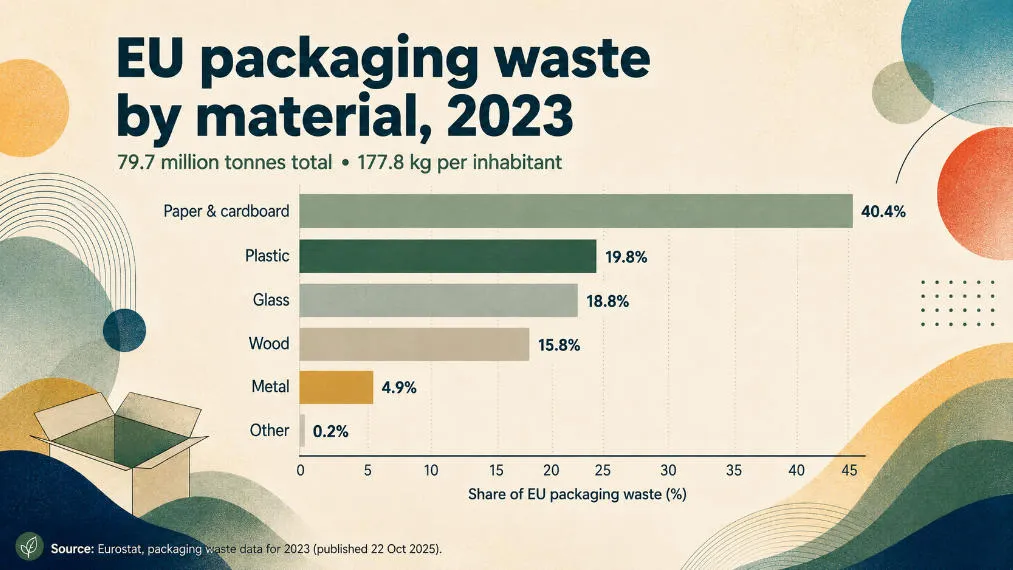
Figure 1. EU packaging waste by material in 2023. Source: Eurostat.
PPWR responds to this trend by moving the EU toward lower packaging use, stronger recyclability, more recycled material and more reuse. The Commission’s stated objective is to make all packaging on the EU market recyclable in an economically viable way by 2030. [1]
The Regulation covers the full packaging life cycle — from design and composition to labelling, reuse, waste prevention and end-of-life management. For B2B buyers, six themes deserve particular attention:
· Recyclability — packaging is moving toward design-for-recycling performance requirements, with later-stage rules linked to recyclability at scale.
· Packaging minimisation — weight and volume should be reduced to what is necessary for functionality, protection and legal requirements.
· Empty-space control — by 2030, grouped, transport and e-commerce packaging filled by economic operators is subject to a maximum 50% empty-space ratio.
· Recycled plastic content — minimum post-consumer recycled-content requirements will apply to specified plastic packaging categories on a phased basis.
· Labelling and sorting information — harmonised material-composition labelling is scheduled to roll out under staged timing tied to implementing measures.
· Documentation and conformity — economic operators have defined responsibilities for conformity assessment, technical documentation and the EU Declaration of Conformity.
These obligations do not all become operative on the same date. The Commission’s August 2026 communications emphasise that implementation is phased and that further secondary legislation continues to complete the framework. [3][4]
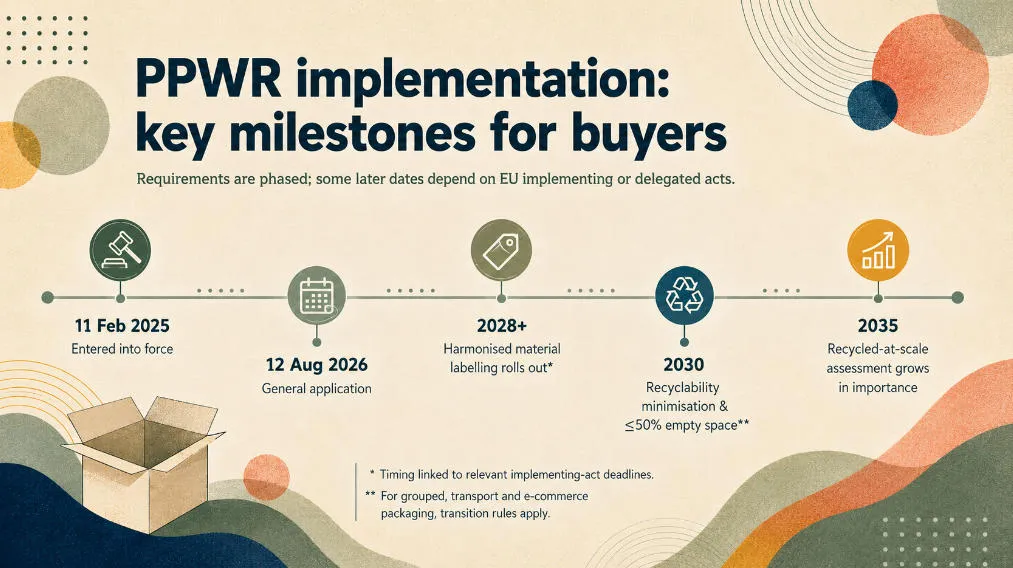
Figure 2. Simplified PPWR implementation timeline for procurement planning. Exact application can depend on the relevant article and secondary legislation.
Topic | Regulatory Direction | Practical Buyer Question |
Scope | All packaging placed on the EU market, regardless of material or origin. | Have we mapped every packaging component, including inner and transport protection? |
Recyclability | Progressive design-for-recycling and later recycling-at-scale requirements. | Can each material be identified, separated and processed in the target market? |
Minimisation | Reduce weight and volume while preserving packaging functions. | Are we paying for unnecessary layers, void space or oversized cartons? |
Transport / e-commerce | Maximum 50% empty-space ratio by 2030 for specified grouped, transport and e-commerce packaging. | Is our carton size aligned to the packed product and protection system? |
Labelling | Harmonised material-composition labelling is introduced on a staged basis. | Who will approve and supply the final EU label artwork and language requirements? |
Documentation | Conformity assessment, technical documentation and declarations form part of the framework. | Can the supplier provide reliable material, weight, structure and supporting records? |
Table 1. Procurement-focused interpretation of PPWR themes. This is a planning aid, not legal advice.
PPWR Article 18 gives importers explicit responsibilities. Importers may place only conforming packaging on the market and, before doing so, must ensure that the manufacturer has completed the applicable conformity assessment and technical documentation, that required labelling is in place, and that the packaging is accompanied by the required documents. [5]
The Regulation also requires importers to keep a copy of the EU Declaration of Conformity available to market-surveillance authorities for five years for single-use packaging and ten years for reusable packaging, and to make technical documentation available on request. [5]
What this means in practice A supplier does not replace the EU importer’s legal role. However, a supplier that can provide clean packaging specifications, material identification, weight data, photos and declarations can make the importer’s compliance workflow significantly more efficient. |
Decorative products create a specific packaging challenge: many items combine metal, glass, resin, electronics, candles or fragile decorative surfaces. The best packaging solution must therefore reduce avoidable material without creating higher damage rates.
1. Map every packaging component
Do not stop at the outer carton. Record retail boxes, inner cartons, paper wraps, plastic bags, foam, bubble film, corner protectors, labels, tape and transport packaging.
2. Design for material separation
Where commercially and technically feasible, favour packaging structures that make material identification and separation clearer at end of life.
3. Reduce unnecessary volume
Optimising carton dimensions can reduce packaging material, container space and freight cost at the same time. PPWR makes this a compliance-relevant design question rather than only a logistics optimisation.
4. Protect fragile products intelligently
Removing protection without testing can create more breakage, replacements and waste. For glass-and-metal lanterns, candle holders and similar goods, material reduction should be risk-based.
5. Prepare data before shipment
Material names, weights, packaging drawings or photos, specifications and supplier declarations are increasingly valuable for buyer compliance files.
6. Keep label artwork controllable
Harmonised EU labelling will roll out in stages. Buyers should retain control of the final market-facing artwork and confirm which information must be printed, engraved, applied digitally or supplied in accompanying documents.
Foryoudecor’s role is to make packaging development more transparent, measurable and adaptable to each buyer’s market requirements. Depending on the product and project, our packaging-support workflow can include the following:
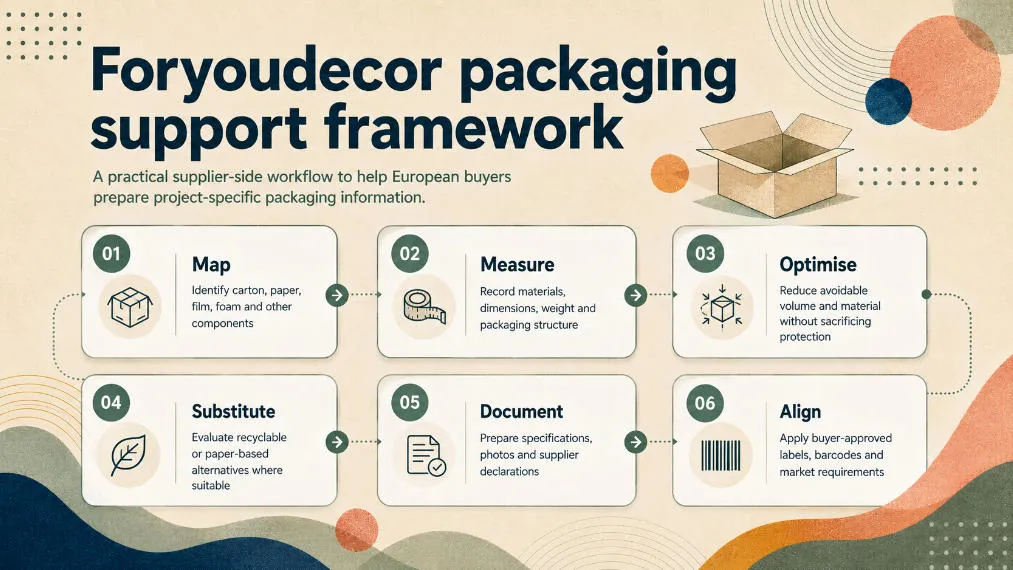
Figure 3. Foryoudecor’s supplier-side packaging support workflow.
Support Area | What We Can Prepare | Buyer Value |
Material mapping | Packaging material list, component identification, packaging photos and structure notes. | Easier upstream data collection and internal compliance review. |
Carton optimisation | Dimension review, packing arrangement and reduction of avoidable void space where product protection allows. | Lower CBM, less material and better shipping efficiency. |
Alternative materials | Paper-based or more recyclable alternatives evaluated where technically suitable. | Supports waste-reduction and recyclability objectives. |
FSC paper options | FSC-certified paper or carton options where requested and available for the project. | Supports responsible paper sourcing objectives; FSC does not replace PPWR compliance. |
Buyer-specific artwork | Buyer-approved barcodes, labels, recycling information and retail packaging artwork. | Keeps market-facing information controlled by the responsible buyer or brand. |
Documentation support | Specifications, material information, supplier declarations and project-specific packaging records. | More complete evidence for importer and retailer compliance workflows. |
Table 2. Foryoudecor packaging support can be adapted to product risk, customer specifications and target-market requirements.
One of the easiest mistakes in sustainability projects is to treat “less packaging” as the only objective. For fragile decorative products, that approach can be counterproductive. A damaged glass lantern, dented metal frame or scratched finish creates product waste, replacement transport and additional packaging demand.
PROTECT Prevent damage | REDUCE Remove excess | RECYCLE Improve material paths | DOCUMENT Create reliable data |
For Foryoudecor projects, the preferred approach is to optimise the entire packaging system — product protection, material use, carton efficiency, recyclability and documentation — rather than change one material in isolation.
Before production, procurement and compliance teams should align the following points with the supplier:
✓ Target EU Member State(s) and sales channel: retail, wholesale, e-commerce or mixed.
✓ Complete packaging bill of materials, including inner and transport packaging.
✓ Packaging dimensions, gross/net packaging weight and expected empty-space ratio.
✓ Recyclability or material-substitution requirements for the project.
✓ Recycled-content requirements where plastic packaging is used and the relevant PPWR category applies.
✓ FSC or other customer-specific paper sourcing requirements, where applicable.
✓ Final labels, barcode artwork and recycling information approved by the buyer.
✓ Technical documentation, supplier declarations and packaging photos required for the buyer’s compliance file.
✓ Product-protection testing or drop/transport validation appropriate to the item and distribution channel.
✓ Responsibility matrix: who is manufacturer, importer, distributor and producer for the relevant PPWR obligations.
Is there one universal “PPWR certificate”?
No. PPWR creates requirements and conformity obligations for packaging, but there is no single generic certificate that automatically makes every packaging format compliant. The applicable packaging, economic-operator role, technical documentation and EU Declaration of Conformity must be assessed for the specific case.
Does FSC certification mean PPWR compliance?
No. FSC can support responsible sourcing for paper and cardboard materials, but it does not replace PPWR requirements on recyclability, minimisation, labelling, documentation or other applicable obligations.
Does PPWR apply to packaging made outside the EU?
Yes. The Regulation covers packaging placed on the EU market regardless of material or origin. The relevant economic operators in the supply chain must therefore understand how their roles and documentation responsibilities apply.
Should buyers remove foam or plastic immediately?
Not automatically. Material substitution should consider product protection, local recycling infrastructure, technical feasibility and the specific PPWR rules that apply. Fragile products may require a tested transition rather than a simple material deletion.
Are all PPWR rules fully settled as of August 2026?
No. The Regulation generally applies from 12 August 2026, but many obligations are phased and some depend on implementing acts, delegated acts, standards or later deadlines. The European Commission continues to publish guidance and FAQs.
Preparing Your Next EU Order? If you are sourcing lanterns, candle holders, cemetery and memorial products, garden decorations or seasonal home décor for the European market, share your packaging requirements with Foryoudecor before production. We can review the packaging structure, identify materials, explore suitable alternatives and prepare project-specific documentation to support a smoother compliance workflow. |
This article is provided for general business information and supplier-planning purposes only and does not constitute legal advice, a conformity assessment or a guarantee that a specific packaging format complies with Regulation (EU) 2025/40. PPWR requirements are phased and can depend on packaging type, economic-operator role, secondary legislation, harmonised standards and Member State implementation. Buyers should confirm the requirements applicable to their own packaging and market with qualified compliance professionals or competent authorities.
1. Regulation (EU) 2025/40 and European Commission packaging-waste overview Open official source | European Commission overview
2. Eurostat — Plastic packaging waste in the EU: 35.3 kg per person (2023 data, published 22 October 2025) Open official source
3. European Commission — New EU rules on packaging enter into application (11 August 2026) Open official source
4. European Commission — PPWR Frequently Asked Questions (updated 3 August 2026) Open official source
5. Regulation (EU) 2025/40, Article 18 — Obligations of importers Open official source
6. EUR-Lex summary — Packaging and packaging waste (from 2026), including 50% empty-space requirement Open official source


 English
 français
 Deutsch
 italiano
 русский
 العربية
 Türkçe
 čeština
 dansk
dansk Suomi
Suomi Polska
 Svenska
 română
 magyar
 slovenský
 norsk
norsk