By Foryou Decor Product Development and Quality Team | Updated: August 2026
Editorial Standard This article separates calendar and regulatory facts, public Foryou Decor product information, engineering and quality-control recommendations, and illustrative purchasing models. Allocation percentages, supplier weights and planning timelines are decision tools rather than market-share statistics or guaranteed commercial results. Final product specifications, packaging, testing and regulatory requirements must be confirmed for each model and destination market. |
Ramadan decoration sourcing is not simply a matter of selecting several lantern designs and requesting the lowest FOB price.
A commercially effective Ramadan collection must connect five elements:
· Cultural relevance and accurate artwork.
· A clear product and price architecture.
· Consistent materials and finishes.
· Safe, market-appropriate lighting options.
· Packaging and compliance suitable for the destination channel.
The strongest collections do not treat Ramadan lanterns, candle holders, LED decorations, tabletop accents and Eid gifts as isolated products. They organise them into a coordinated visual system that works across store displays, e-commerce listings, hospitality projects and home settings.
For importers and retailers, the main sourcing risk is therefore not a lack of product options. It is a lack of control over how those options work together.
Ramadan follows the Islamic lunar calendar, so its position in the Gregorian calendar changes each year. In many markets, Ramadan 2027 is tentatively expected to begin on 8 February 2027. The final date may differ by country and remains subject to local crescent-moon observations and official announcements.[1][2]
This moving calendar has direct commercial implications:
· Sample approval dates move.
· Production windows move.
· Shipping and customs deadlines move.
· Retail photography and digital content must be completed earlier.
· Repeat orders may need to be confirmed before the previous season has fully ended.
Ramadan products also serve several different moments: preparing the home, creating a welcoming entrance, decorating the iftar table, providing ambient lighting, supporting hotel and restaurant displays, and preparing Eid gifts and family gatherings.
YouGov research covering the UAE and Saudi Arabia highlights changes in spending priorities, shopping habits, media use and social-commerce opportunities during Ramadan. For brands and retailers, this strengthens the case for visually consistent products, video-friendly details, giftable packaging and bundle-ready combinations.[3]
Commercial Conclusion A Ramadan collection must be designed for both the physical environment and the digital sales environment. |
A common purchasing mistake is to select products one by one without defining the role each item should play in the final assortment. A stronger approach is to organise the range into five product roles.
Product Role | Typical Products | Commercial Function | Main Buying Priority |
Statement Products | Large floor lanterns, tall stainless steel lanterns, display sets | Attract attention and establish the collection theme | Visual impact and finish quality |
Core Volume Products | Medium table lanterns, metal candle lanterns, LED lanterns | Generate repeatable retail volume | Price-quality balance |
Add-On Products | Candle holders, LED candles, small hanging ornaments | Increase basket value | Compact size and easy coordination |
Giftable Products | Mini lantern sets, boxed candle holders, Eid gift sets | Support seasonal gifting | Packaging and perceived value |
Project Products | Wall lanterns, large floor units, coordinated hospitality decor | Serve hotels, restaurants and event buyers | Customisation and structural reliability |
This structure prevents the collection from becoming too dependent on one product type. A range containing only large lanterns may look impressive but perform poorly in parcel shipping and entry-level price segments. A range containing only small decorative products may be easy to sell online but lack the visual impact required for store windows and hospitality projects.
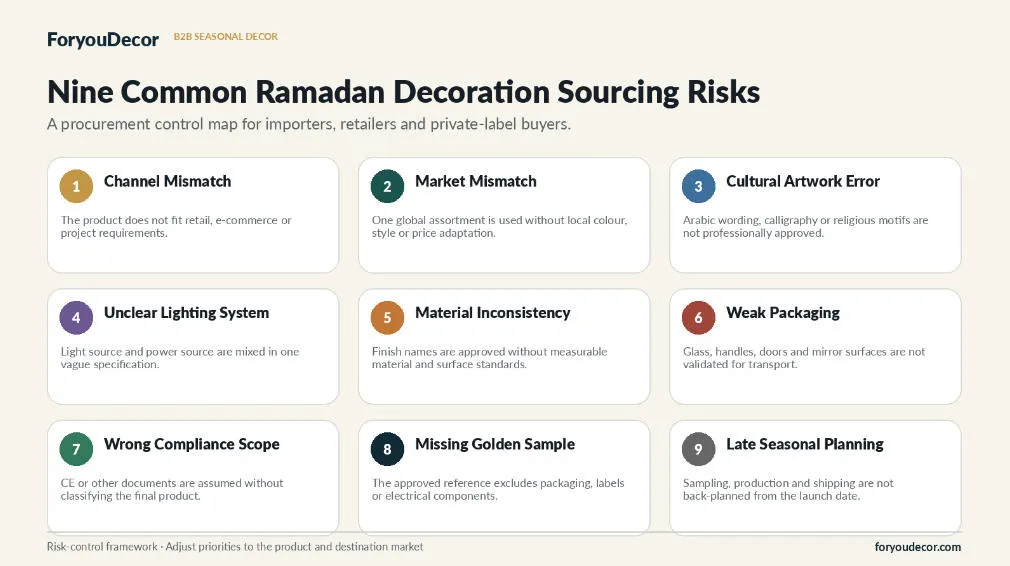
Figure 1. Nine common Ramadan decoration sourcing risks. The framework is a planning tool and should be adapted to the final product and market.
A product that works well in a hotel lobby may not be suitable for an e-commerce parcel. A product designed for a supermarket seasonal aisle may not meet the visual expectations of a premium home decor chain.
Before requesting quotations, buyers should define the target country, retail or wholesale channel, expected retail price, online or offline sales model, target consumer, display environment, packaging format and forecast order quantity.
Control Points
· Product dimensions and weight
· Breakage and return risk
· Pack size and barcode placement
· Assembly and photography requirements
· Carton efficiency and parcel cost
Recommended Control Action Include the target channel and expected use scenario in the RFQ rather than sending only a product image. |
Ramadan is observed internationally, but product preferences are not identical across the Gulf, Europe, North Africa and Southeast Asia.
A market may favour modern black-and-gold metal lanterns, traditional mosque silhouettes, lightweight hanging decorations, premium stainless steel products, battery-operated LED lighting, compact gift sets or large hospitality installations.
Control Points
· Preferred colours
· Cultural motifs
· Typical home sizes
· Target price positions
· Main retail channels
· Electrical-product requirements
· Gift-packaging expectations
Recommended Control Action Create a destination-market brief before finalising the product assortment. |
Crescent moons, stars, mosque silhouettes, geometric patterns and Arabic calligraphy can create a strong visual identity. They should be applied carefully and consistently.
When the product includes Arabic text, the buyer and supplier should confirm the exact wording, spelling, reading direction, letter connection, legibility, placement and cultural appropriateness. Sacred wording should not be placed on disposable materials or surfaces likely to be stepped on or casually discarded.
Control Points
· Final wording
· Font and letter connection
· Product orientation
· Colour and position
· Packaging placement
· Approval by an Arabic-speaking reviewer
Recommended Control Action Approve a final PDF artwork before tooling, printing, laser cutting or mass production. |
A technically weak specification may compare LED, battery and solar as if they were equivalent product categories. They are not.
The light source may be a real candle, fixed LED, flickering LED candle or replaceable LED module. The power source may be replaceable batteries, a rechargeable battery, USB charging, solar charging or mains electricity.
Control Points
· Light source
· Power source
· Battery chemistry, voltage and capacity
· Runtime and test conditions
· Switch, timer or sensor
· Light colour
· Battery access and intended use
Recommended Control Action Separate the light-source and power-source fields in the specification and quotation. |
Two lanterns can look almost identical in a photograph but differ substantially in metal thickness, stainless steel grade, weld quality, edge treatment, coating, glass thickness, handle strength, door alignment and base stability.
The same finish name can also describe different processes. Gold may refer to painted gold, powder-coated gold, electroplated gold, brushed gold, mirror-gold stainless steel or antique gold.
Control Points
· Base material and thickness
· Surface treatment and gloss level
· Approved colour sample and tolerance
· Scratch and weld standard
· Edge and burr requirement
· Glass specification
· Stability requirement
Recommended Control Action Convert visual approval into measurable material, finish and workmanship standards. |
Glass lanterns, mirror-finish stainless steel, tall cylindrical structures, handles, doors and nested sets require packaging to be developed with the product.
Late packaging approval increases the risk of glass contact, surface scratching, handle impact, product movement, unstable stacking and poor e-commerce returns handling.
Control Points
· Glass and surface separation
· Handle and door restraint
· Accessory control
· Carton compression
· Drop and vibration review
· Retail labels and barcode
· Repacking after inspection
Recommended Control Action Approve the final product and final packaging together as one production reference. |
A non-electrical metal candle holder, a battery LED lantern, a rechargeable USB light and a solar outdoor lantern may have different legal requirements.
CE marking is not a general quality symbol. It applies only when the product is covered by specific EU legislation requiring the mark. Other obligations may include GPSR, REACH, RoHS, WEEE, battery rules, traceability, warnings and destination-language instructions.
Control Points
· Final product classification
· Destination country
· Electrical and battery configuration
· Responsible economic operator
· Applicable reports and declarations
· Labels, warnings and instructions
Recommended Control Action Classify the final configuration before requesting reports, declarations or markings. |
An attractive sample does not automatically control mass production. The approved reference must include the final dimensions, material, finish, light source, battery, Arabic artwork, logo, labels, instructions, retail packaging and shipping protection.
Material, component, coating, glass, artwork and packaging changes should require written buyer approval.
Control Points
· Signed specification
· Approved golden sample
· Photographic record
· Approved packaging sample
· Change-control procedure
· In-line and final inspection criteria
Recommended Control Action Link the physical golden sample to a controlled specification and written change process. |
Because Ramadan moves earlier in the Gregorian calendar, development and shipping dates must be recalculated each season.
Custom colours, Arabic artwork, electrical testing, packaging development and ocean freight require more time than repeat orders.
Control Points
· Target in-market date
· Sample and artwork approval deadlines
· Testing and compliance window
· Mass-production lead time
· Inspection and shipping buffer
· Retail photography and launch
Recommended Control Action Back-plan every activity from the required in-market date and maintain a buffer for approval delays. |
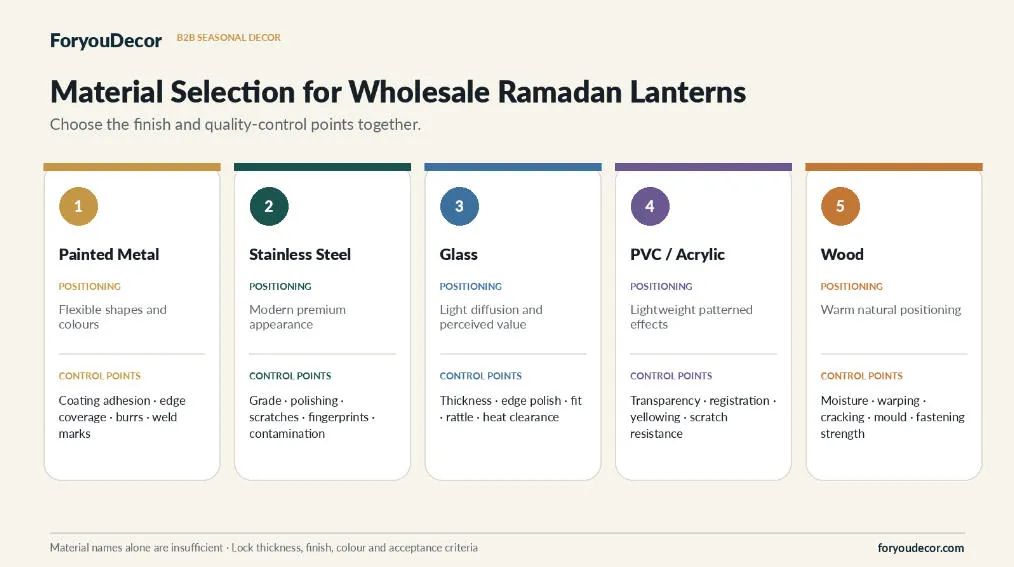
Figure 2. Material positioning and quality-control priorities for wholesale Ramadan lanterns.
Painted metal supports a broad range of shapes, colours and laser-cut patterns. It is suitable for entry-level and mid-market collections.
Key Quality Points
· Coating adhesion
· Consistent colour
· Complete edge coverage
· Clean laser-cut openings
· No sharp burrs
· Controlled welding marks
· Stable base
· Aligned doors and handles
Stainless steel creates a modern and premium appearance. Mirror silver, mirror gold, brushed silver and black-titanium finishes can support more contemporary Ramadan collections.
Key Quality Points
· Verified material specification
· Scratch prevention
· Fingerprint visibility
· Surface-film protection during production
· Consistent polishing direction
· Clean edge treatment
· Protection against mixed-metal contamination
· Individual wrapping where required
Glass improves light diffusion and perceived product value but introduces a major logistics risk.
Key Quality Points
· Glass thickness
· Edge polishing
· Panel fit
· Rattle prevention
· Clearance around the candle or LED
· Temperature suitability
· Inner protection
· Drop-test performance
PVC or acrylic tubes and panels can reduce weight and provide decorative pattern effects.
Key Quality Points
· Transparency
· Pattern registration
· Colour consistency
· Scratch resistance
· Heat clearance
· Yellowing risk
· Fit with the metal structure
· Odour control
Wood lanterns provide a warm, natural look and can support rustic or Scandinavian-influenced Ramadan ranges.
Key Quality Points
· Moisture control
· Warping and cracking
· Paint or stain consistency
· Glass-panel fit
· Fastener strength
· Mould prevention
· Packaging ventilation where necessary
A material name by itself is not a complete specification. Buyers should lock the material, thickness, finish process, approved colour sample, gloss level and acceptance criteria.
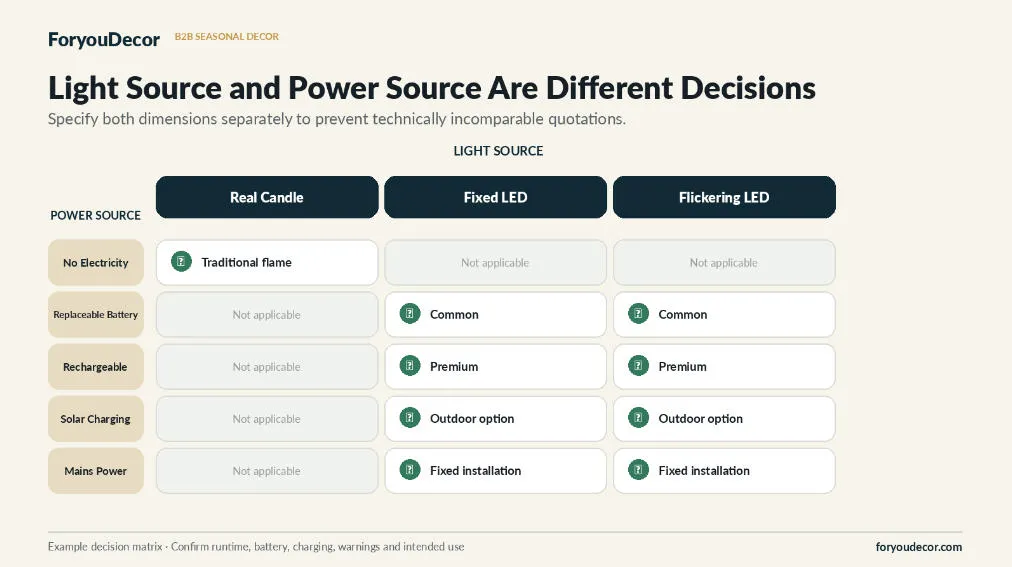
Figure 3. Light source and power source should be specified as separate technical dimensions.
System | Best Suited To | Main Advantages | Main Risks to Control |
Real Candle | Traditional table and floor lanterns | Authentic flame and warm atmosphere | Heat, ventilation and fire safety |
Replaceable-Battery LED | Retail, gifting and family use | Convenient, reusable and flameless | Battery access, leakage and runtime |
Rechargeable LED | Premium and hospitality collections | Reduced battery replacement and modern user experience | Charging port, battery quality and cable specification |
Solar LED | Outdoor entrances, patios and hospitality landscapes | No external power supply during use | Weather exposure, charging performance and sealing |
Mains-Powered LED | Fixed commercial or event installations | Stable output for long operating periods | Electrical compliance and cable management |
· Base stability
· Ventilation
· Distance between the flame and surrounding materials
· Handle temperature
· Door security
· Maximum candle size and height
· Warnings and surface protection
· Battery chemistry
· Battery-compartment design
· Polarity marking
· Switch durability
· Timer function where applicable
· Runtime test
· LED colour consistency
· Battery replacement instructions
· Small-battery access risks
Solar performance should be assessed as a complete energy system rather than by looking at panel size or battery capacity alone.
· Panel output
· Battery capacity
· LED power
· Controller losses
· Charging environment
· Daily operating time
· Weather resistance
· Light-sensor performance
Engineering Principle A larger panel or battery does not automatically guarantee better performance unless the full energy system is balanced and tested under defined conditions. |
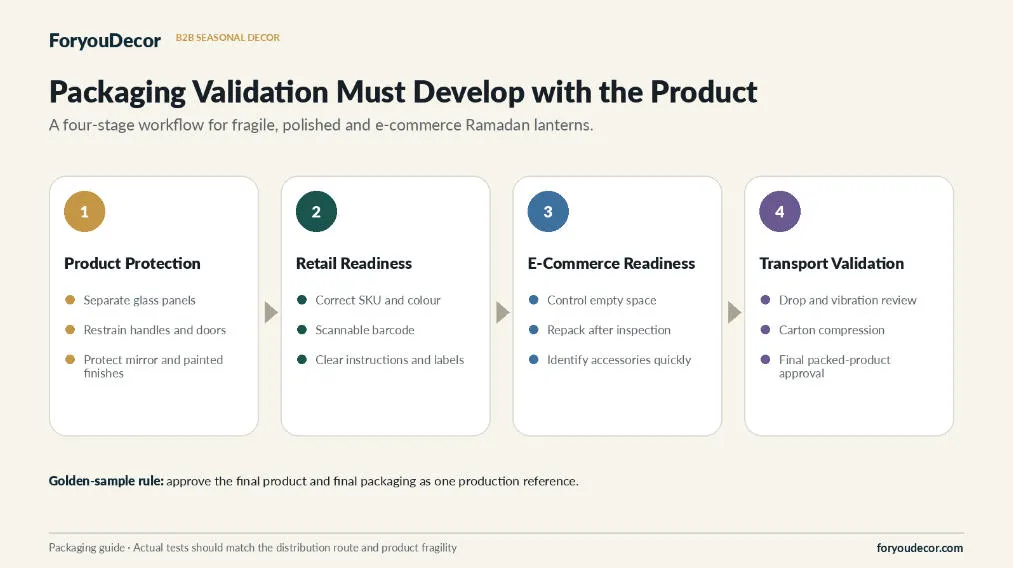
Figure 4. A four-stage packaging validation workflow for wholesale Ramadan lanterns.
Ramadan lantern packaging is often approved too late. This is especially risky for glass lanterns, mirror-finish stainless steel, tall cylindrical products, products with handles or doors, nested sets and e-commerce parcels.
The packaging must perform three jobs:
1. Protect the product in transport.
2. Present the product correctly at retail.
3. Communicate the required product and compliance information.
· Glass panels cannot contact each other.
· Handles cannot strike the body.
· Doors cannot open during transport.
· Painted and mirror surfaces are protected.
· Accessories cannot move freely.
· Bases and tops are supported.
· Product weight is distributed correctly.
· Product name, colour and size are identifiable.
· Barcode is scannable.
· Master and inner carton quantities match.
· Assembly instructions are understandable.
· The product image matches the item inside.
· Parcel-drop risk is considered.
· Empty internal space is controlled.
· Outer-carton compression is adequate.
· The product can be repacked after inspection.
· Accessories are easy to identify.
· Returns do not require complicated reassembly.
Packaging should be part of the approved golden sample rather than treated as a separate purchasing detail.
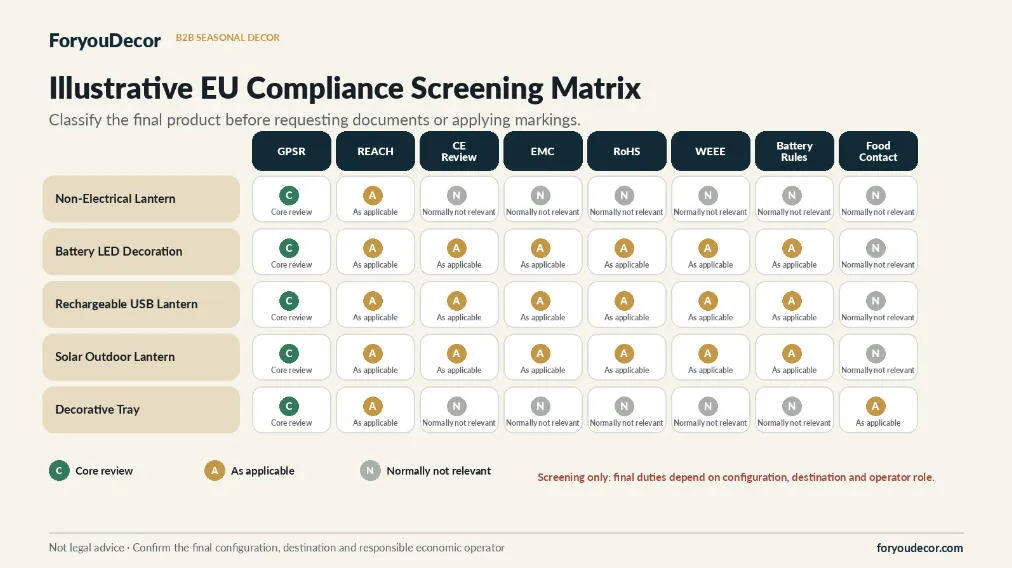
Figure 5. Illustrative EU compliance screening matrix. Final applicability depends on the product configuration, destination and economic-operator role.
Ramadan decorations do not all fall into the same regulatory category. A non-electrical metal candle holder, a battery-operated LED lantern and a rechargeable outdoor light may have different legal requirements.
Product Type | Typical Areas to Review |
Non-Electrical Lantern or Candle Holder | GPSR, REACH, mechanical safety, heat and fire risks, traceability, instructions and warnings |
Battery-Operated LED Decoration | GPSR, applicable CE legislation, EMC where applicable, RoHS, battery requirements, WEEE, labelling and technical documentation |
Rechargeable USB Lantern | GPSR, applicable CE legislation, EMC, RoHS, battery regulation, charging safety, WEEE and instructions |
Solar Outdoor Lantern | Electrical requirements as applicable, battery regulation, RoHS, WEEE, weather exposure, ingress protection and outdoor warnings |
Decorative Tray | GPSR and REACH; food-contact rules if marketed for serving or contact with food |
Children’s Seasonal Product | Additional assessment may be needed if the design, marketing or play value causes the product to fall within toy rules |
The EU General Product Safety Regulation requires economic operators to place only safe products on the market and strengthens requirements relating to risk assessment, technical documentation, traceability, product information and distance sales.[4]
CE marking is mandatory only when a product is covered by specific harmonised EU legislation that requires it. CE should not be used as a general quality mark for products outside that scope.[5]
For relevant electrical and electronic products, RoHS restricts specified hazardous substances and WEEE addresses collection, treatment, recovery and recycling responsibilities.[6][7]
Products containing batteries also require assessment under Regulation (EU) 2023/1542, while REACH may affect coatings, plastics, metals, adhesives and other materials used in decorative products.[8][9]
Compliance Boundary Compliance should be confirmed according to the final product structure, destination country and the role of the manufacturer, importer, brand owner, distributor or other responsible economic operator. This article is a sourcing guide, not legal advice. |
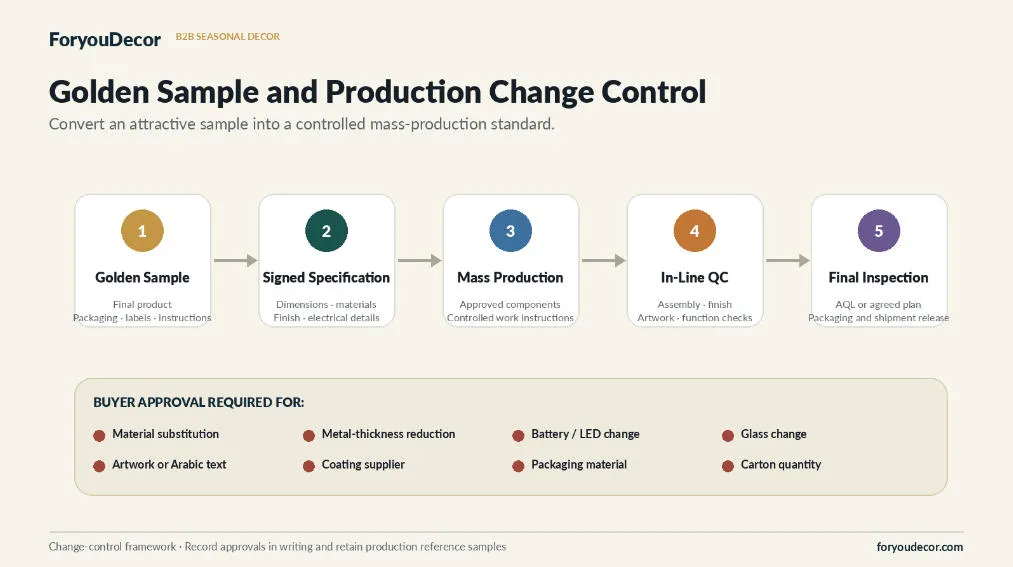
Figure 6. Golden-sample, specification and production-control workflow.
A showroom sample is not automatically a production standard. Before mass production, the buyer should approve a golden sample that includes:
· Final dimensions
· Final material and finish
· Final light source and electrical configuration
· Final Arabic artwork and logo
· Final warning labels and instructions
· Final retail packaging
· Final shipping protection
· Final carton markings
The approved sample should be supported by a signed specification sheet and photographic record.
· Material substitution
· Metal-thickness reduction
· Battery, LED or solar-panel change
· Coating-supplier change
· Glass-thickness change
· Artwork or text change
· Packaging-material change
· Carton-quantity change
· Product-size change
Without formal change control, an attractive sample may still lead to inconsistent mass production.
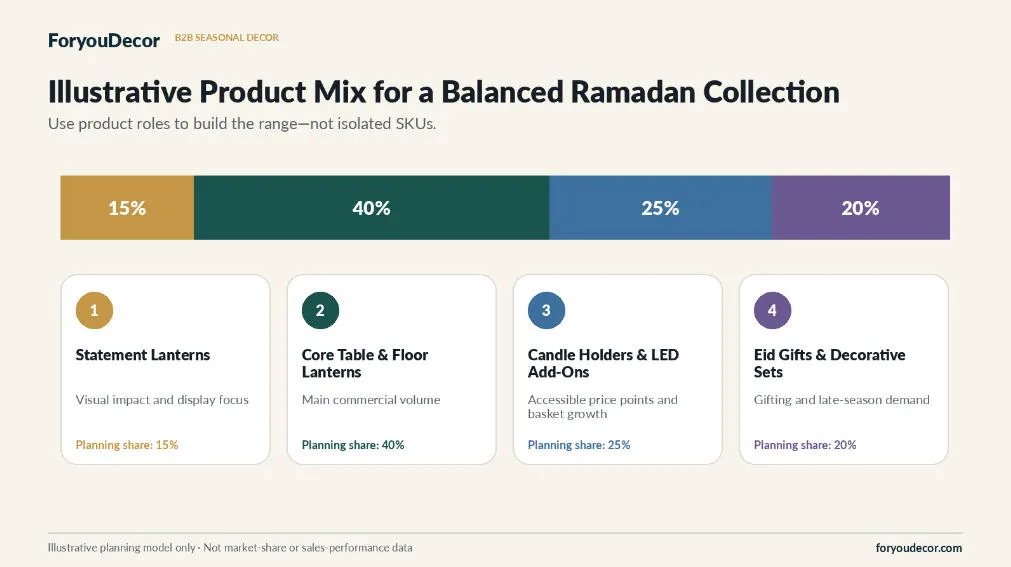
Figure 7. Illustrative product mix for a balanced Ramadan collection. The percentages are a planning model, not market-share data.
Product Group | Illustrative Share | Purpose |
Statement Lanterns | 15% | Create visual impact and support displays |
Core Table and Floor Lanterns | 40% | Build the main commercial volume |
Candle Holders and LED Add-Ons | 25% | Increase basket size and price accessibility |
Eid Gifts and Decorative Sets | 20% | Support gifting and final-season demand |
E-Commerce Sellers
· Compact lanterns
· Lightweight products
· LED items
· Gift boxes and sets
· Low-breakage products
Retail Chains
· Clear price ladders
· Shelf-ready packaging
· Coordinated colours
· Barcode and labelling consistency
· Higher carton efficiency
Hotels and Restaurants
· Larger statement pieces
· Wall-mounted formats
· Reusable metal products
· Consistent finishes
· Custom sizes
· Project-based delivery schedules
Importers and Wholesalers
· Multiple price levels
· Mixed product categories
· Repeatable core items
· Private-label packaging
· Flexible product development
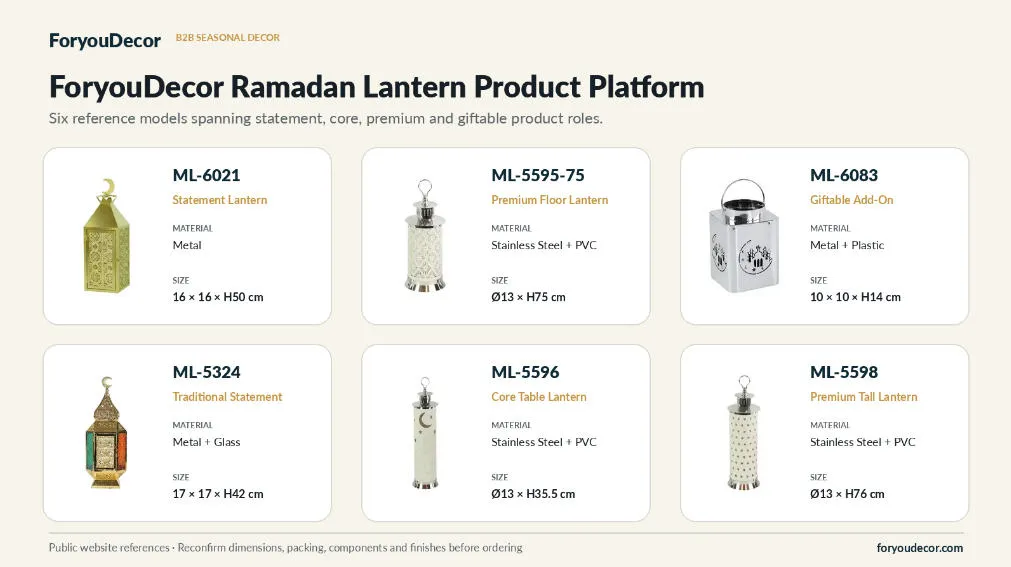
Figure 8. Foryou Decor Ramadan lantern platform with six public reference models.
Foryou Decor supplies Ramadan lanterns, candle holders, LED lighting, tabletop decor, hanging decorations and Eid gift products. OEM and ODM support can include custom colours, dimensions, logos, packaging, barcode labels and coordinated seasonal collections.
ML-6021 is a metal lantern featuring crescent-moon and star elements. The public product page lists a metal construction, a size of 16 x 16 x H50 cm, six pieces per outer carton and a public 20GP reference quantity of 1,830 pieces.[10]
The model can function as a medium-sized statement lantern for retail displays, dining areas and seasonal home-decor collections.
ML-5595-75 combines stainless steel with a decorative PVC tube. The public product page lists a diameter of 13 cm, height of 75 cm, one piece per inner box, six pieces per outer carton and a public 20GP reference quantity of 1,602 pieces.[11]
Its tall cylindrical format and stainless steel surface make it suitable for modern, premium and hospitality-oriented collections.
ML-6083 uses a silver metal-and-plastic structure with crescent, moon and mosque-inspired cut-out patterns. The public product page lists a size of 10 x 10 x H14 cm, 24 pieces per outer carton and a public 20GP reference quantity of 15,984 pieces.[12]
It can be positioned as a compact table lantern, seasonal add-on, giftable item or coordinated product within a silver-toned range.
Foryou Decor can develop coordinated collections around black and gold, mirror silver, mirror gold, antique brass, white and gold, green and gold, and neutral contemporary palettes. A collection may combine large floor lanterns, table lanterns, wall-mounted lanterns, candle holders, LED candles, centrepieces, hanging ornaments, decorative trays and Eid gift sets.
The Foryou Decor website states more than 20 years of home-decor experience, more than 200 new designs annually, a 2,000+ square metre showroom and service coverage across 66 countries.[13]
Specification Note Public website dimensions, packing and loading quantities are reference information. Final specifications must be reconfirmed in the formal quotation, sample approval and purchase-order documents. |
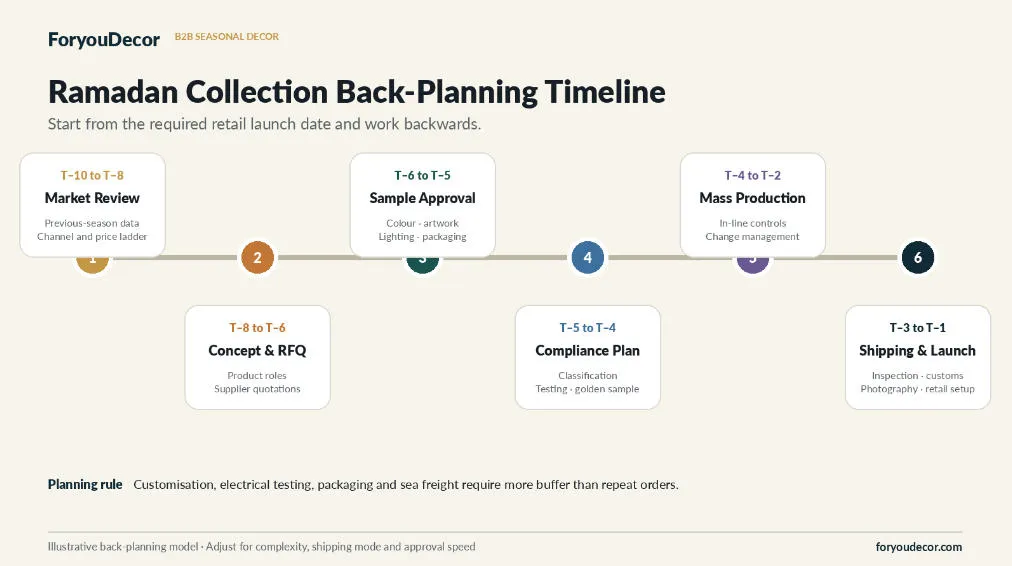
Figure 9. Illustrative back-planning timeline for a customised Ramadan collection.
Time Before Retail Launch | Recommended Activity |
T-10 to T-8 Months | Review the previous season and define markets, channels and price architecture |
T-8 to T-6 Months | Select concepts, request quotations and develop samples |
T-6 to T-5 Months | Approve colours, Arabic artwork, light source and packaging |
T-5 to T-4 Months | Confirm the compliance plan, testing and golden sample |
T-4 to T-2 Months | Mass production, in-line control and final inspection |
T-3 to T-1 Months | Shipping, customs, warehouse intake and retail photography |
T-1 Month | Store setup, e-commerce launch, social content and replenishment review |
Because Ramadan 2027 is tentatively expected to begin around 8 February in many markets, customised-product buyers should calculate approvals, testing, production and logistics backwards from the required in-market date. The final religious date remains subject to local confirmation.[1][2]
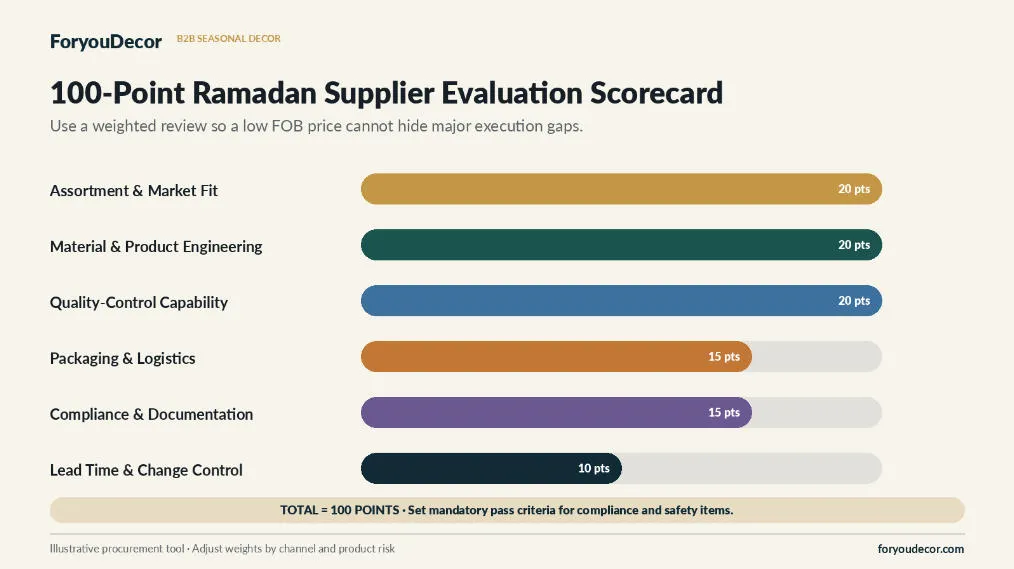
Figure 10. Illustrative 100-point supplier scorecard for wholesale Ramadan decoration projects.
Evaluation Area | Weight |
Assortment and Market Fit | 20 |
Material and Product Engineering | 20 |
Quality-Control Capability | 20 |
Packaging and Logistics | 15 |
Compliance and Documentation | 15 |
Lead-Time and Change Control | 10 |
Total | 100 |
A low FOB quotation should not compensate for a major gap in material verification, cultural-artwork control, electrical configuration, packaging, traceability, final inspection or documentation.
· Destination market
· Sales channel
· Target retail price
· Estimated order quantity
· Expected launch date
· Required delivery term
· Repeat-order potential
· Product category
· Target dimensions
· Material and finish
· Colour and motif
· Arabic text
· Intended use
· Indoor or outdoor application
· Real candle or LED
· Power source
· Battery type
· Target runtime
· Light colour
· Timer or sensor requirement
· Charging method
· Brown box or colour box
· Gift packaging
· Barcode
· Retail label
· Instruction languages
· E-commerce parcel requirement
· Inner and master carton quantity
· Drop-test requirement
· Destination country
· Product classification
· Required test reports
· Declaration requirements
· Warning labels
· Traceability information
· Importer or responsible economic-operator details
· Sample requirement
· Artwork approval
· Golden sample
· Packaging sample
· Pre-production meeting
· Inspection standard
· Change-control procedure
A complete collection may include statement lanterns, table lanterns, wall lanterns, candle holders, LED candles, crescent and star decorations, hanging ornaments, table centrepieces and Eid gift sets. The final assortment should be based on the buyer’s market, channel and price structure rather than a fixed universal list.
Yes. Ramadan lanterns can support several price levels, materials and display formats. They can be used as statement products, core seasonal products or gift items. Commercial suitability still depends on carton efficiency, breakage risk, target price and local product preferences.
Stainless steel, metal and glass can all support premium positioning. Stainless steel is suitable for modern mirror or brushed finishes. Painted metal provides greater flexibility in colour and pattern. Glass improves light diffusion and perceived value but requires stronger packaging.
Real candles provide a traditional flame effect but require careful heat, ventilation and fire-risk evaluation. LED options are suitable where buyers prioritise flameless operation, reusability and convenience. Rechargeable and solar options may support premium or outdoor applications but require more technical validation.
Not automatically. CE marking is required only where a product falls under specific EU legislation that mandates it. A non-electrical decorative lantern or candle holder may instead be governed primarily by general product-safety and chemical requirements. The final assessment must be based on the actual product configuration.
Breakage can be reduced through correct glass-panel support, controlled internal movement, protection between metal and glass, handle restraint, adequate corner and top protection, carton-compression control and distribution-appropriate drop and vibration testing.
Yes. Colours, cut-out patterns, Arabic text, logos and packaging can be customised. Arabic artwork should be reviewed and approved before production to confirm spelling, direction, letter connection, meaning and cultural appropriateness.
Buyers should work backwards from the required retail launch date. Custom products need time for design, sampling, artwork approval, packaging, testing, mass production, inspection and logistics. Repeat orders normally require fewer development steps, but material and packaging availability should still be confirmed early.
Yes. Foryou Decor supports OEM and ODM development, including custom colours, sizes, product structures, logos, labels, packaging, barcode information and coordinated seasonal collections.
The central challenge in Ramadan sourcing is not finding enough products. It is building a collection in which the products work together commercially, visually and technically.
A well-managed project should answer the following questions before mass production:
1. Which market and sales channel is the collection designed for?
2. What role does each product play?
3. Are the motifs, Arabic wording and colours culturally appropriate?
4. Are the material and finish standards measurable?
5. Is the light source clearly separated from the power-source specification?
6. Has the packaging been validated with the final product?
7. Have the correct regulatory requirements been identified?
8. Does the golden sample include packaging, labels and instructions?
9. Is the purchasing calendar aligned with the moving Ramadan date?
When these elements are controlled, a supplier relationship can move beyond isolated product purchasing and become a repeatable seasonal collection-development programme.
Build Your Next Ramadan and Eid Collection with Foryou Decor Foryou Decor supports importers, wholesalers, retailers, e-commerce sellers and hospitality buyers with Ramadan lanterns, metal and stainless steel lanterns, candle holders, battery and LED decorations, wall and hanging decor, table centrepieces, Eid gift products, OEM and ODM development, private-label packaging, quality inspection and export support. For a relevant proposal, provide your target market, sales channel, preferred style, target price, expected quantity, delivery date and packaging requirements. |
Your reliable partner for wholesale Ramadan and Eid decorations
The references below support calendar, market-research, regulatory and public-product statements. Illustrative assortment percentages, timelines and supplier weights were created as procurement-planning tools for this article and are not presented as market statistics.
[1] U.S. Naval Observatory - Selected Islamic Observances
[2] Timeanddate - Ramadan Start 2027 (tentative dates by country)
[3] YouGov - Ramadan 2025: Key Consumer Insights for Brands in the UAE and KSA
[4] EUR-Lex - General Product Safety Regulation (EU) 2023/988
[5] Your Europe - CE Marking Requirements
[6] European Commission - RoHS Directive
[7] European Commission - Waste Electrical and Electronic Equipment (WEEE)
[8] EUR-Lex - Regulation (EU) 2023/1542 on Batteries and Waste Batteries
[9] European Commission - REACH Regulation
[10] Foryou Decor - Ramadan Lantern ML-6021
[11] Foryou Decor - Ramadan Lantern ML-5595-75
[12] Foryou Decor - Ramadan Lantern ML-6083
[13] Foryou Decor - Wholesale Decorative Lighting and Company Information
· Public Foryou Decor product specifications are website references and should be reconfirmed before ordering.
· Assortment percentages, supplier weights and planning timelines are illustrative decision models.
· Compliance applicability depends on the final configuration, destination market and economic-operator role.
· Ramadan dates are tentative until confirmed by the relevant local authority or moon-sighting body.
· The document is prepared for B2B sourcing and website-content purposes and does not replace legal, laboratory or certification advice.


 English