Ramadan 2027 is expected to begin around 8 February, subject to local moon-sighting decisions. For importers, wholesalers and retailers, that early calendar position changes the commercial timetable: assortment design, testing, packaging and order confirmation must happen earlier, while product relevance, cultural accuracy and regulatory documentation must be resolved before production—not after shipment.
• Ramadan is no longer a narrow novelty occasion. The wider Islamic consumer economy reached US$2.43 trillion in 2023 and is forecast to reach US$3.36 trillion by 2028, implying approximately 6.7% annual growth across the measured sectors. • The retail opportunity is concentrated in a short, highly visible seasonal window. Google and Visa data show strong search and spending peaks in the UAE and Saudi Arabia, alongside rapid growth in cross-border e-commerce discovery. • The product trend is moving from isolated crescent-and-star ornaments toward complete hosting environments: layered lighting, iftar table presentation, textiles, serving accessories, fragrance and reusable year-round pieces. • The biggest buyer risks are calendar compression, undifferentiated designs, cultural mistakes, fragmented MOQs, unstable finishes, breakage, electrical documentation gaps and end-of-season inventory. • The strongest sourcing model is a modular collection architecture supported by early compliance mapping, shared components, tiered pricing, golden-sample control and market-specific merchandising assets. |
The commercial case for Ramadan products rests on a structural consumer market, not a temporary social-media trend. DinarStandard reports that Muslim consumer spending across key Islamic-economy sectors reached US$2.43 trillion in 2023 and is projected to reach US$3.36 trillion by 2028. The same research estimates that the global Muslim population surpassed two billion in 2023 and that more than 540 million Muslim youth are expected by 2030. [1]
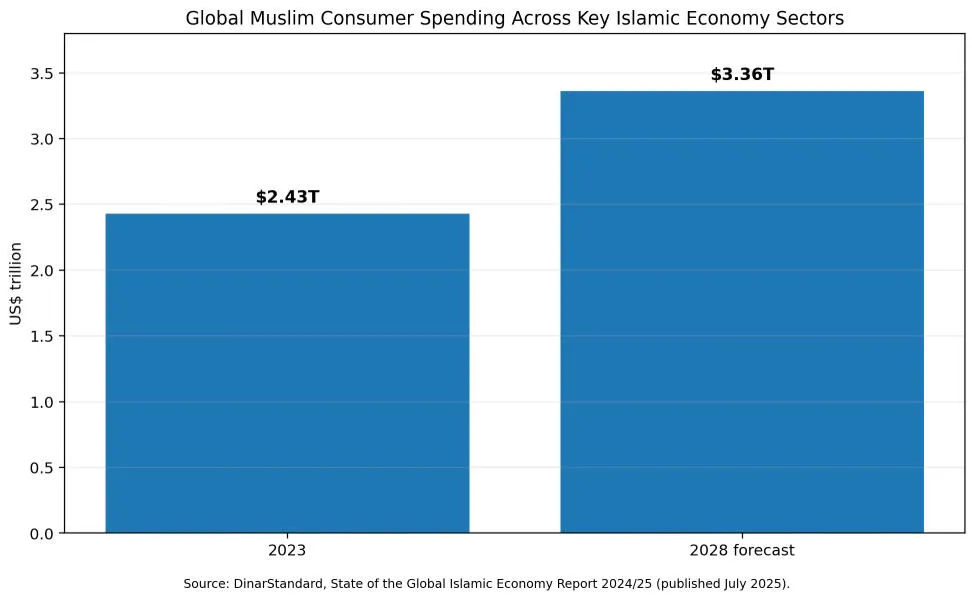
Figure 1. Global Muslim consumer spending across key Islamic-economy sectors.
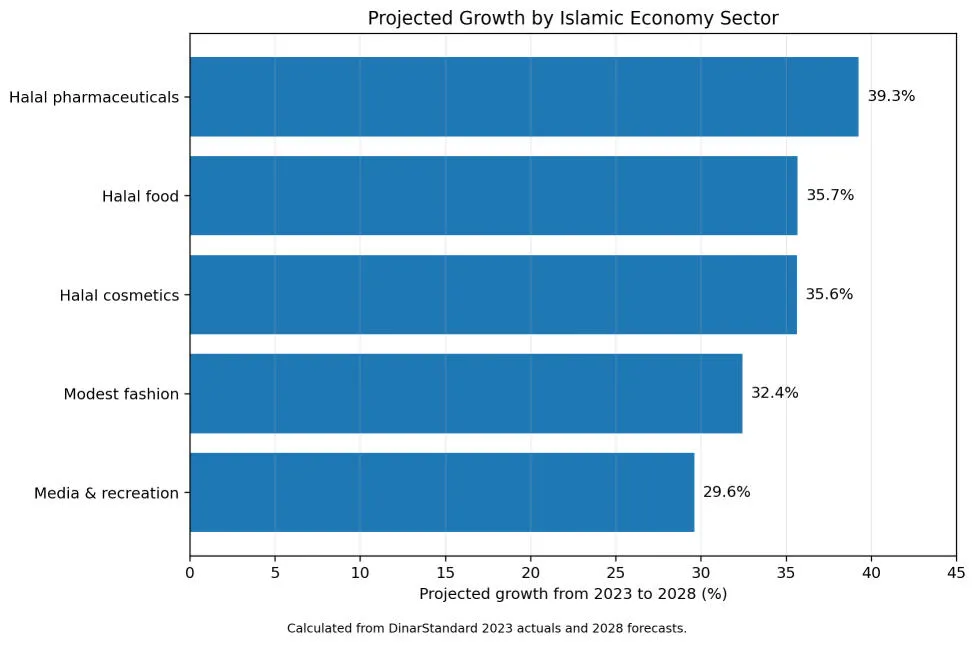
Figure 2. Projected growth by sector, calculated from 2023 actuals and 2028 forecasts.
Google and Visa research adds a second signal: consumers in the UAE and Saudi Arabia are becoming more digitally engaged and more open to international commerce. In 2024, discretionary-category search volume grew by roughly 10% in both markets, while Visa spend increased 17% in the UAE and 11% in Saudi Arabia. Search interest for international e-commerce brands rose by more than 90% in both countries. During the Ramadan and Eid Al Fitr peak, luxury-apparel search interest rose 21% in the UAE and 45% in Saudi Arabia toward the end of Ramadan. [2]
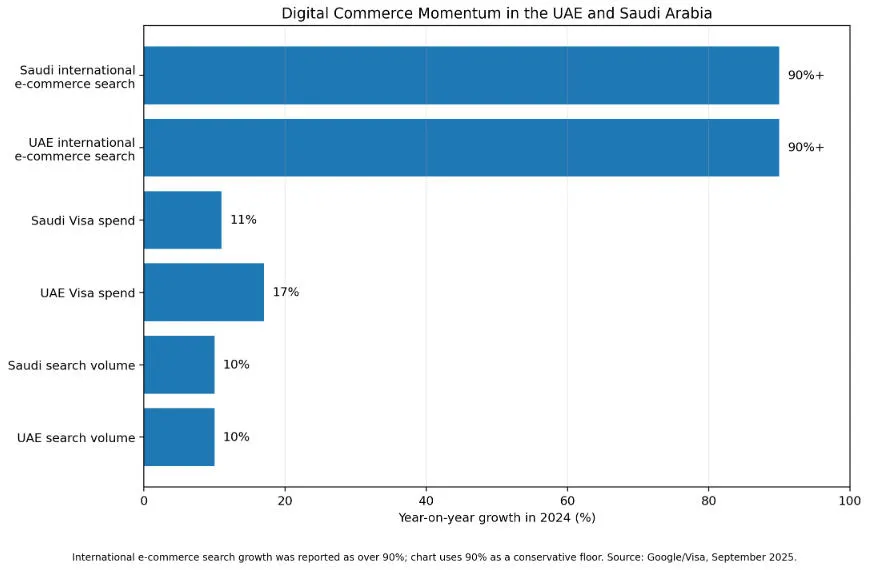
Figure 3. Digital commerce momentum in the UAE and Saudi Arabia.
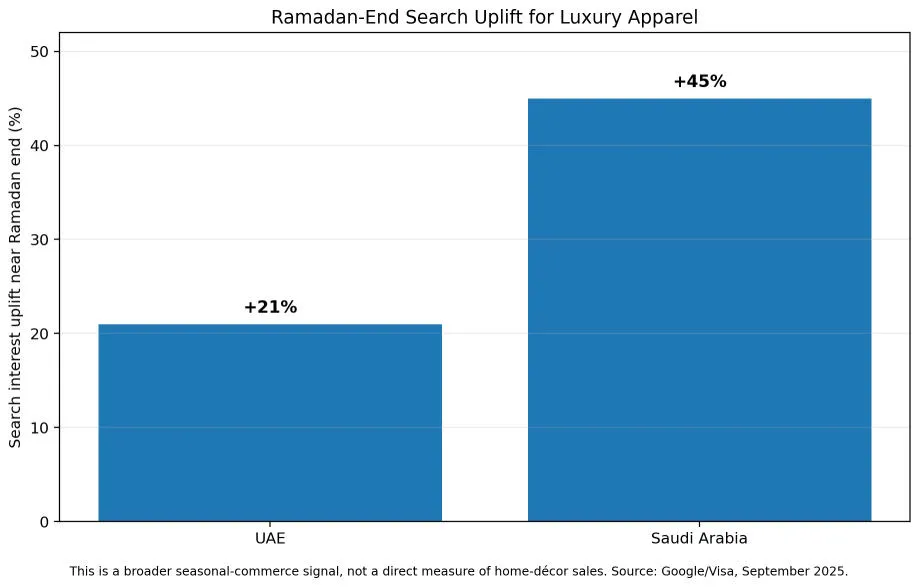
Figure 4. Ramadan-end luxury-apparel search uplift. This is a seasonal-commerce signal, not direct home-décor sales data.
These apparel figures should not be presented as direct home-décor sales data. They are, however, a powerful indicator of the timing and intensity of the broader Ramadan retail peak. Home-décor buyers should therefore plan assortment, content and replenishment around a compressed period of high discovery and high purchase intent.
A review of 2026 collections from IKEA, 2XL Home, Home Centre and H&M Home shows a clear shift toward complete home and hosting stories: lighting, table presentation, textiles, decorative accents and sensory elements are being merchandised together. [3][4][5][6]
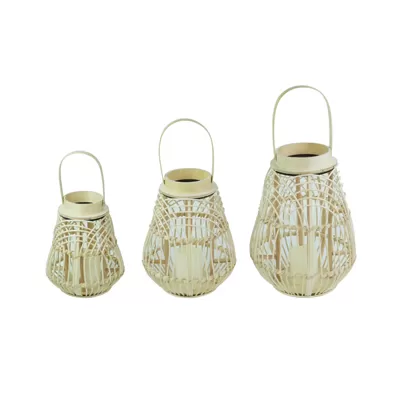
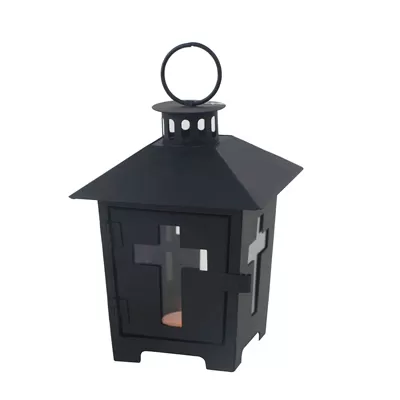
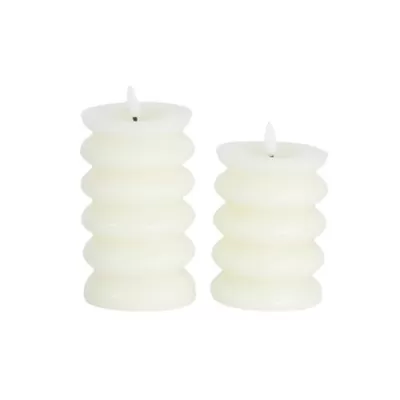
Current 2026 retail collections from IKEA and major regional home retailers place lanterns, tealight holders, candles and battery-operated light chains at the centre of the Ramadan home. The commercial implication is that buyers should develop a lighting system rather than a single lantern: one hero lantern, one compact tabletop item and one low-cost accent-light product. Warm light, safe battery access, stable bases and coordinated finishes matter more than excessive ornamentation.
Ramadan merchandising increasingly connects décor with hosting. Trays, tiered stands, candle holders, bowls, placemats and compact centrepieces create a higher basket value and give retailers multiple display points. For B2B buyers, a coordinated table story can outperform a collection of unrelated decorative SKUs because it is easier to merchandise, photograph and cross-sell.
Gold remains commercially important, but the more sophisticated direction combines brushed brass, champagne gold, antique bronze or matte black with earthy neutrals, deep green, sapphire, burgundy and controlled multicolour accents. The winning look is warm and celebratory without appearing theatrical or disposable.
Laser-cut metal, layered acrylic, perforated patterns, arches and abstract mashrabiya-inspired geometry offer cultural recognition while allowing contemporary styling. Crescent and star motifs remain useful, but buyers should avoid overloading every SKU with the same symbols. A strong range uses one design language across different silhouettes.
Small-space consumers need décor that can sit on a console, shelf, dining table or balcony and store efficiently after Eid. Nested lantern sets, knock-down stands, removable inserts, reversible tabletop pieces and products that convert from Ramadan to year-round décor reduce both consumer hesitation and retailer inventory risk.
Countdown calendars, child-safe LED lanterns, tabletop signs, giftable mini sets and easy-to-assemble decorations create a lower price tier and encourage family participation. Products intended for children must be clearly classified and tested under the correct product-safety regime; decorative articles should not be casually marketed as toys.
Scented candles, incense accessories and warm material combinations are increasingly used to create a full evening atmosphere. This adds value, but it also increases compliance complexity. Fragranced products, oils and mixtures require separate chemical and labelling review rather than being treated as ordinary decorative accessories.
Reusable materials, replaceable components and designs that remain appropriate beyond Ramadan help justify higher retail prices and reduce markdown exposure. Buyers should prefer neutral product names, timeless geometric patterns and packaging that communicates multiple use occasions rather than printing a single year or overly narrow campaign message.
Buyer question | Strategic answer |
Which products offer the strongest repeat potential? | Lanterns, candle holders, serving trays, compact table décor and modular lighting accessories. These categories can be refreshed through finish, size and pattern without rebuilding the entire supply chain. |
Should a collection use Arabic calligraphy? | Only when the wording has been independently checked for spelling, meaning, context and regional suitability. Sacred text should never be placed on disposable packaging, floor products or surfaces likely to be mishandled. |
Real candles or LED? | Use a hybrid assortment. Real-flame products deliver atmosphere and premium appeal; LED products improve family safety, apartment usability and omnichannel shipping. Each route requires a different compliance file. |
How many SKUs should a new buyer launch? | A disciplined 12–24 SKU capsule is usually more effective than a broad but visually inconsistent range. The collection should cover lighting, table, hanging or wall décor, and entry-price gifting. |
When should 2027 orders be confirmed? | For a February 2027 Ramadan launch, buyers should ideally complete range confirmation and testing by October 2026. Exact deadlines depend on production complexity, shipping mode and destination. |
How can buyers reduce MOQ without creating a generic range? | Use shared metal frames, battery boxes, glass sizes, packaging structures and finish platforms while changing panels, inserts, colours and artwork. Component commonality lowers production fragmentation without sacrificing design differentiation. |
Pain point: Ramadan moves approximately 10–11 days earlier each solar year. An early-February 2027 start compresses the period between autumn range planning, year-end factory capacity and retail launch.
Recommended solution: Work backwards from the first in-store date. Freeze the line plan early, lock critical components first and separate long-lead electrical parts from decorative variations.
Pain point: Many suppliers repeat the same crescent, star and mosque silhouettes, causing search-result sameness and immediate price comparison.
Recommended solution: Build a recognisable design system using a consistent arch, pattern scale, finish palette and packaging language. Differentiate through proportion, function and collection coherence rather than extra decoration.
Pain point: Incorrect Arabic, inappropriate use of religious wording or confusing Ramadan and Eid messages can damage trust and create costly artwork changes.
Recommended solution: Use native-language validation, market-specific copy approval and a cultural review gate before tooling, printing or online publication.
Pain point: Too many unique frames, glass sizes, electronic modules and cartons push up MOQ and complicate replenishment.
Recommended solution: Standardise hidden components and vary visible surfaces. Use two material platforms, three size families and a controlled finish library.
Pain point: Common defects include uneven plating, colour variation, sharp edges, unstable bases, glass breakage, poor battery contact, short LED runtime and inconsistent warm-light colour.
Recommended solution: Define critical-to-quality limits, approve a golden sample, test every electrical unit functionally, control finish by signed reference panels and inspect packed-product performance—not only loose samples.
Pain point: Seasonal décor often combines metal, glass, acrylic and electronics. Attractive retail packaging may still fail during e-commerce or pallet distribution.
Recommended solution: Design internal protection around the real distribution channel, conduct transit/drop testing agreed with the buyer and separate scratch-sensitive finishes. Packaging should be easy to open, photograph and reclose.
Pain point: A certificate list is often requested after production, when materials, labels or battery design can no longer be changed economically.
Recommended solution: Create a SKU-level compliance matrix before quotation approval. Identify product classification, destination rules, tests, labels, responsible economic operator and EPR obligations before the purchase order.
Pain point: Buyers need images, dimensions, instructions, warnings, lifestyle scenes and multilingual data for marketplaces and AI-assisted search. Suppliers frequently provide only basic white-background photos.
Recommended solution: Treat the content pack as a deliverable: product data sheet, compliant listing copy, image set, packaging image, installation instructions, warning artwork and structured attributes.
Pain point: Highly dated graphics and single-use forms quickly lose relevance after the selling window.
Recommended solution: Use evergreen frames, replaceable panels and neutral packaging. Keep 70% of the assortment reusable or repeatable and limit experimental motifs to controlled quantities.
A practical approach is a 70/20/10 portfolio:
Portfolio share | Role in the range |
70% Core repeatable | Lanterns, tealight holders, trays, tiered stands, neutral geometric table décor and reusable light accessories. |
20% Seasonal trend | New colour stories, layered acrylic, sculptural arches, decorative light chains, scent accessories and coordinated textiles. |
10% Test and discovery | New mechanisms, premium finishes, personalised items, unusual materials or market-specific symbols tested in limited quantities. |
The range should also have three commercial price levels—opening price, core mid-market and premium statement—using shared components wherever possible. A modular architecture can combine a small number of frames, glass sizes, battery boxes and packaging structures with different panels, finishes and inserts. This preserves differentiation while reducing MOQ and quality complexity.
Market | Priority direction |
GCC premium and mid-market | Brass tones, statement lanterns, hosting pieces, fragrance accessories, generous scale, elevated gift packaging and strong evening ambience. |
Europe and the United Kingdom | Compact products, flat-pack or nested construction, battery LED, multilingual warnings, modern neutrals and products suitable for mixed interior styles. |
Southeast Asia | Colour, gifting, family participation, affordable sets, easy storage and locally relevant messaging. |
North America | E-commerce-safe packaging, clear dimensions, family-friendly LED, contemporary Islamic design and strong visual content for marketplaces. |
Ramadan 2027 is expected to begin around 8 February, subject to moon sighting and local authority announcements. [13] The following calendar is a recommended B2B planning model rather than a legal or universal deadline.
Recommended timing | Key actions |
August–September 2026 | Trend direction, target retail prices, line architecture, cultural review and preliminary compliance classification. |
September–October 2026 | Sampling, finish approvals, packaging structure, electrical testing plan and listing-content preparation. |
By late October 2026 | Final assortment, purchase order, artwork lock, golden samples and confirmed inspection standards. |
November–December 2026 | Mass production, in-line inspection, final testing, packing validation and booking. |
December 2026–January 2027 | Shipment, warehouse allocation, marketplace content upload and retail training. |
January–early February 2027 | Launch, replenishment decisions and campaign execution ahead of the expected Ramadan start. |
Compliance should begin with product classification. A decorative metal lantern, a real-flame candle product, a battery LED lantern and a scented diffuser may appear in one retail collection, but they do not share the same legal route. Buyers should require a SKU-level compliance matrix before approving production. The matrix below focuses on common EU requirements; destination-country and retailer requirements may add further obligations. [7]–[12]
Product type | Core EU requirements | Evidence to request | Main risks |
Non-electrical metal, glass, wood or acrylic décor | EU GPSR; REACH chemical restrictions; product traceability; destination-language warnings where needed. | Risk assessment, material declarations/test reports, batch or model identification, manufacturer/importer or EU responsible economic-operator details. | Sharp edges, tip-over, breakage, small parts, surface coatings and misleading CE marking. CE is not automatically required for ordinary non-electrical décor. |
Real-flame candles and candle products | GPSR; fire-safety and safety-labelling expectations. EN 15493 addresses candle fire safety, EN 15494 safety labels and EN 15426 sooting behaviour. | Burn tests where relevant, warning labels, material and fragrance documentation, stability and heat assessment. | Excessive flame, secondary ignition, unstable holders, high surface temperature, container breakage and missing warnings. |
LED lanterns, string lights and illuminated décor | Applicable CE legislation, typically EMC and RoHS; Low Voltage Directive only where voltage scope is met; GPSR; WEEE obligations. | EU Declaration of Conformity where applicable, EMC and RoHS evidence, circuit/BOM records, labels, instructions and traceability. | EMC failure, overheating, wiring defects, battery contact failure, incorrect CE use, missing crossed-out wheeled-bin marking and poor instructions. |
Battery-operated products | EU Batteries Regulation 2023/1542 plus applicable product rules; national producer-responsibility requirements. | Battery specification, chemistry and supplier records, required markings, removability/replaceability assessment, transport documentation where applicable. | Unsecured button cells, leakage, reverse polarity, inaccessible replacement, incorrect disposal information and missing importer EPR planning. |
Retail and transport packaging | EU PPWR 2025/40 generally applies from 12 August 2026; national packaging EPR schemes continue to matter. | Packaging BOM and weights, recyclability data, material identification, supplier declarations and market-specific EPR information. | Excess packaging, non-recyclable combinations, unsupported environmental claims, weak protection and missing market-specific labels. |
Food-contact trays, bowls or serving accessories | EU food-contact framework rules when the product is marketed for contact with food; material-specific measures may also apply. | Food-contact declaration, migration testing where applicable, intended-use and temperature conditions. | Using decorative coatings or adhesives without food-contact evidence; unclear distinction between decorative and serving use. |
Children’s countdown calendars or play-oriented items | Toy rules may apply if the item is intended or marketed for play; GPSR remains relevant outside toy scope. | Age grading, toy classification decision, mechanical/chemical testing where required, warnings and traceability. | Small parts, magnets, accessible batteries, cords, sharp points and marketing décor as a toy without appropriate testing. |
Scented oils, diffusers or fragranced mixtures | REACH and CLP may apply; poison-centre notification and UFI requirements can apply to hazardous mixtures. | Formula/SDS, classification review, label artwork, allergen or hazard information and notification evidence where required. | Treating a chemical mixture as ordinary décor, incomplete labels, leakage and incompatible packaging. |
CE marking is not a universal quality label. Ordinary non-electrical décor should not carry CE unless a specific EU harmonisation law requires it. Conversely, an LED or electrical product may require CE marking under applicable legislation, but CE alone is not evidence of correct testing, traceability, WEEE planning or battery compliance.
· A written product classification and destination-market compliance matrix for every SKU.
· A complete specification including dimensions, materials, finishes, electrical parameters, battery type and intended use.
· A signed golden sample and controlled finish references for every colour or plating option.
· A test plan linked to actual product risks—not a generic certificate folder.
· Packaging drawings, packed-product photos and agreed transit-testing criteria.
· Final artwork proofs containing model or batch identification, economic-operator details, warnings and required symbols.
· In-line and final inspection criteria covering function, appearance, stability, sharp edges, breakage and packaging.
· Structured digital content: white-background images, lifestyle images, dimensions, instructions, attributes, compliant copy and multilingual files.
· A replenishment and spare-component plan for batteries, glass, inserts or other serviceable parts.
The 2027 Ramadan décor opportunity will not be won by adding more crescent shapes to an existing catalogue. It will be won by suppliers and buyers who can create a coherent evening-and-hosting experience, launch early, protect cultural credibility, control technical quality and provide traceable compliance evidence.
The most commercially resilient products will combine recognisable Ramadan atmosphere with year-round usability. The most resilient sourcing programmes will combine design differentiation with component standardisation. And the most trusted suppliers will treat compliance, packaging and digital content as part of product development rather than post-production paperwork.
Foryou Decor develops coordinated Ramadan and Eid collections across metal lanterns, candle holders, LED décor, table accessories, hanging decorations and giftable seasonal products. Our sourcing model supports OEM and ODM development, material and finish selection, packaging engineering, quality inspection and export documentation for different retail channels and destination markets.
The report combines current market data, retailer-assortment observation and regulatory source review. Retail assortment evidence is used to identify directional product themes; it should not be interpreted as audited sell-through data. Forecast dates for Ramadan remain subject to local moon-sighting decisions.
[1] DinarStandard, State of the Global Islamic Economy Report 2024/25, published 7 July 2025.
[2] Google and Visa, “Search and spend decoded: the commerce landscape in the UAE and Saudi,” September 2025.
[3] IKEA, GOKVÄLLÅ Ramadan 2026 collection and regional Ramadan campaign pages.
[4] 2XL Home, Ramadan Collection 2026.
[5] Home Centre, 2026 Ramadan décor and lantern product assortment.
[6] H&M Home, Ramadan Home Collection 2026.
[7] Regulation (EU) 2023/988 on general product safety (GPSR), applicable from 13 December 2024.
[8] European Commission, RoHS Directive overview.
[9] European Commission, Waste from Electrical and Electronic Equipment (WEEE) overview.
[10] Regulation (EU) 2023/1542 concerning batteries and waste batteries; European Commission batteries overview.
[11] Regulation (EU) 2025/40 on packaging and packaging waste (PPWR), generally applicable from 12 August 2026.
[12] CEN-CENELEC and BSI references for EN 15493, EN 15494 and EN 15426 candle safety standards.
[13] 2027 Ramadan date forecasts from moon-sighting and calendar sources; exact dates remain subject to local religious authority confirmation.
· DinarStandard SGIE 2024/25 overview
· Google/Visa UAE and Saudi commerce research
· IKEA Ramadan 2026 collection
· EU General Product Safety Regulation
· EU Packaging and Packaging Waste Regulation overview



 English