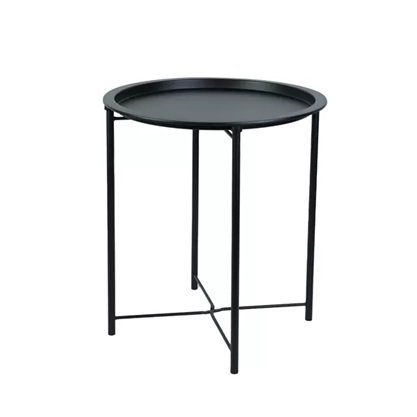
A lantern may look simple in a catalog, but a commercial order combines product engineering, appearance control, packaging protection, compliance, production timing and logistics. For an importer or retail buyer, the real sourcing question is not simply, "What is the unit price?" It is: "Can the supplier reproduce the approved design consistently across the full order, protect it through transport, document the quality decision and deliver it under the agreed commercial terms?"
This guide focuses on decorative metal lanterns, candle lanterns, metal-and-glass lanterns, cemetery lanterns and related solar or LED variants. It is written for importers, wholesalers, distributors, retail chains, e-commerce businesses and private-label brands that need a repeatable procurement process rather than a consumer buying guide.
The sourcing process should begin with an RFQ package that converts a visual idea into measurable requirements. A product photo can communicate style, but it cannot define material grade, metal thickness, dimensions, color tolerance, surface finish, glass type, hinge construction, handle load, packaging method or electrical configuration.
For a standard metal-and-glass lantern, the RFQ should normally identify the intended market and channel, target dimensions, materials by component, surface finish, color reference, glass type, candle or LED compatibility, handle/door requirements, logo or labeling needs, retail packaging, carton requirements, order quantity, required trade term and target delivery window. Solar or LED products should also define the electrical architecture and the compliance documentation expected for the destination market.
Buyer control point If two suppliers are quoting from different assumptions, their prices are not truly comparable. Freeze the comparison basis before negotiating the last few cents. |
A B2B buyer should understand who controls design, sourcing, production, quality inspection, packing and export coordination. This matters especially in home and garden decor, where one supplier may coordinate multiple production processes or specialist factories rather than manufacture every component under one roof.
Foryoudecor provides a useful example of why this distinction should be stated clearly. Its public FAQ describes the business as a professional trading company with strong partnerships with reliable manufacturers. Its company profile shows production processes such as laser cutting, powder coating, spinning and shielded welding, while a company Canton Fair article states that an associated factory supports cutting, punching, welding, powder coating, surface finishing, assembly and final packing. For a buyer, the practical question is therefore not only ownership of machinery, but whether the supplier can control the production route, documentation and corrective action across the order.
A quotation should state exactly what is included: product configuration, packaging, artwork or tooling assumptions, inspection scope, delivery point and trade term. Incoterms 2020 should be used with a named place or port so that cost and risk transfer are unambiguous .
For containerized shipments, buyers should be particularly careful with habitual use of FOB. ICC explains that FOB is for sea or inland-waterway transport and notes that FCA should be considered when goods are handed to the carrier before being loaded on board the vessel, as commonly happens at container terminals [12]. This is not a pricing detail; it determines the delivery point and risk allocation.
Sampling is where aesthetic intent becomes a production reference. For a new lantern, the sample review should cover structure and appearance separately. Structural approval may include dimensions, base stability, door clearance, hinge movement, handle geometry, glass fit, assembly method and accessory completeness. Appearance approval may include color, gloss level, powder-coat texture, plating tone, weld visibility, polishing standard, glass clarity or texture and logo position.
For private-label or OEM/ODM programs, the approved sample should be supported by written specifications: drawing, component list or BOM where appropriate, finish reference, artwork, packaging file and inspection checklist. The purpose is to reduce dependence on memory or subjective phrases such as "same as sample" when production moves between teams or batches.
Before the production order is released, the buyer and supplier should confirm a controlled pre-production file. At minimum, it should state the approved product version, dimensions and tolerances, material and finish, approved color reference, glass specification, logo/label artwork, packaging configuration, carton marks, barcode rules if used, quantity by SKU, inspection method and any required compliance documents.
Foryoudecor states that its quality workflow includes a production contract, pre-production sample inspection, packing confirmation, production follow-up and pre-shipment inspection. Its AQL service page also states that order details, drawings, color requirements, material standards, logo artwork, labeling and packaging instructions are reviewed before mass production.
Lantern defects are often created before final assembly. Typical incoming checks may include sheet or tube dimensions, metal surface condition, glass size and edge quality, hinge and fastener fit, coating or plating inputs, electrical modules, solar panels, batteries, candle cups, handles, labels and packaging materials. The inspection plan should focus on characteristics that are expensive or impossible to correct after finishing.
For mixed-material products, compatibility also matters. A metal frame can be within dimension while the glass panel is not, creating stress, rattling or assembly difficulty. A correct-looking hinge can still create door misalignment after coating adds film thickness. These interactions are why buyers should control assemblies, not only individual components.
The exact manufacturing route depends on the lantern design, but metal lantern production commonly combines several fabrication operations. Foryoudecor publicly lists laser cutting, spinning, powder coating and shielded welding on its company profile [1], and separately describes associated production support that includes cutting, punching and welding.
At this stage, QC should focus on geometry and workmanship before finishing hides or amplifies problems. Buyer-critical checks may include hole location, frame squareness, flatness, weld penetration/appearance where relevant, removal of sharp edges, spatter control, grinding marks, door alignment and fixture consistency. Catching geometry problems before coating is normally easier than reworking completed decorative surfaces.
Powder coating, wet paint, plating, brushed finishes and polished stainless steel create different risk profiles. A specification should identify not only the visual color but also the finish type and the required acceptance criteria. For outdoor or cemetery lanterns, corrosion resistance may be a core commercial requirement rather than a cosmetic preference.
ISO 9227:2022 specifies neutral salt spray (NSS), acetic acid salt spray (AASS) and copper-accelerated acetic acid salt spray (CASS) test methods for assessing corrosion resistance of metallic materials and protective coatings [6]. Importantly, ISO states that the standard does not prescribe one universal exposure period or result interpretation for every product and that salt-spray testing is not intended to predict long-term corrosion resistance in service [6]. Therefore, a buyer should define the chosen method, exposure duration and acceptance criteria in the product specification instead of writing only "salt spray test required."
Metal-and-glass lanterns require tolerance control across multiple parts. During trial assembly and in-process inspection, check whether glass panels seat without excessive force, whether retainers hold glass securely, whether door gaps are consistent, whether hinges and latches operate after coating, and whether the handle folds or carries the product as designed.
For candle lanterns, buyers should also review heat-related design assumptions, ventilation, candle clearance and the intended candle size or holder. Product-specific safety requirements vary by construction and market, so these points should be confirmed with the applicable standard or qualified compliance partner rather than assumed from appearance alone.
A non-electrical candle lantern and a solar LED lantern should not share the same compliance checklist. Electrical and battery components add material, electrical, labeling, transport and end-of-life requirements that vary by destination.
For EU sales, the European Commission states that RoHS restricts ten hazardous substances in electrical and electronic equipment and that products with an electrical or electronic component must comply unless specifically excluded [9]. REACH is the EU chemicals framework for managing chemical risks and includes restrictions and obligations affecting substances in products [8]. The EU Battery Regulation 2023/1542 applies to all battery categories, including batteries incorporated into products [10]. If a lantern uses lithium cells or batteries, transport documentation should also be checked against UN Manual of Tests and Criteria subsection 38.3; UNECE published Amendment 1 to Revision 8 in September 2025, including changes to subsection 38.3.
Final inspection is important, but it occurs after most manufacturing cost has already been incurred. In-process QC should therefore target failure modes that can spread across a batch: cutting or fixture drift, welding deformation, finish inconsistency, glass mismatch, repeated assembly interference, electrical module failure, missing accessories and packaging errors.
Foryoudecor says its QC team performs in-process checks that can include metal cutting, welding, polishing, powder coating, painting, glass fitting, LED function testing, assembly review and packaging preparation. The value of this stage is corrective: identify a pattern early enough to isolate affected work-in-process and adjust the production method before the full lot is completed.
Not every characteristic needs the same inspection method. Some high-risk or functional points are better controlled at the process station rather than left to a final random sample. Examples may include presence of glass retainers, correct accessory packs, latch engagement, LED on/off function, polarity, solar module connection or severe sharp-edge hazards. The buyer and supplier should decide which characteristics are process-checked and which are sampled at final inspection.
Packaging should be approved as part of the product, especially for glass lanterns. The correct solution depends on channel: wholesale master cartons, retail-ready color boxes, e-commerce single-unit parcels and mixed-SKU container shipments create different impact and handling conditions.
A packaging specification can define inner protection, glass separation, bagging, inserts, box strength, carton quantity, carton marks, barcode position and palletization if used. Where drop testing is required, ISO 2248:1985 defines a vertical impact test by dropping a complete, filled transport package under predetermined conditions; ISO confirms the standard remained current after review in 2022 [7]. Buyers should still set the actual test height, orientations and pass/fail criteria appropriate to their package and distribution system rather than assuming the standard provides one universal pass level.
Foryoudecor states that its packaging review may cover brown boxes, color boxes, mail-order boxes, display boxes, hangtags, barcode labels, carton marks, palletization and e-commerce single-item packaging.
ISO 2859-1:2026 defines acceptance-sampling schemes indexed by Acceptance Quality Limit (AQL) for lot-by-lot inspection by attributes. In practical sourcing, the buyer and supplier should agree the inspection level, AQL values, defect definitions and special tests before the order is produced. The standard provides the sampling framework; it does not decide which cosmetic or functional defects matter to your brand.
A useful lantern inspection checklist can cover appearance, dimensions, materials, color/finish, welding, structure, stability, glass, door/hinge/latch function, accessories, labeling, retail packaging, export carton, quantity and any relevant electrical function. Foryoudecor states that its final random inspection covers appearance, dimensions, material, color, workmanship, structure, stability, function, accessories, labels, marks, inner packaging and export cartons.
Shipment release should be a controlled decision, not an automatic event after production finishes. The buyer should have the final inspection result, corrective-action status if needed, final packing data, shipping marks and required commercial documents. The PO or contract should identify the agreed Incoterm and named place/port so that responsibility for delivery, carriage and risk is clear.
For solar or battery products, logistics release should also verify that the battery chemistry and required transport documentation are consistent with the shipment method. Changing a battery type late in development can change the transport compliance file, so battery configuration should be locked before booking.
A mature sourcing program uses the first shipment to improve the next one. Record breakage, cosmetic complaints, assembly issues, missing components, packaging damage, sell-through feedback and recurring inspection defects. Then update the specification, limit samples, packaging file and inspection checklist before the repeat order. This turns sourcing from a sequence of isolated orders into a controlled product platform.
Stage | Buyer Should Freeze | Supplier / Factory Output | Risk If Skipped |
RFQ | Product scope, quantity, market, channel, delivery term | Comparable quotation and feasibility comments | Quotes based on different assumptions |
Sample | Structure, finish, color, glass, function, branding | Approved sample + revision record | Subjective approval; sample-to-bulk drift |
Pre-production | Drawing/spec, packaging, labels, QC checklist | Controlled production file | Wrong version enters production |
Fabrication | Critical dimensions and workmanship | Cut / formed / welded components | Batch geometry defects |
Surface finish | Finish type, reference, appearance criteria, outdoor test if relevant | Finished metal parts + test evidence if specified | Color/corrosion disputes |
Assembly | Fit, stability, moving parts, accessories | Complete product | Glass/door/handle problems |
Final QC | AQL plan, defect definitions, special tests | Inspection report and corrective actions | Shipment decision becomes subjective |
Packaging | Pack method, labels, carton, channel-specific protection | Approved packed goods | Breakage, returns, relabeling |
Logistics | Incoterm, named place/port, documents, battery transport file if applicable | Booked and documented shipment | Cost/risk ambiguity or transport delay |
Buying from a photo only: Convert the photo into a component-level specification and measurement sheet before quoting.
Approving color by words such as "antique gold": Use an approved physical sample, controlled finish reference and agreed viewing/acceptance method.
Treating the sample as the entire specification: Keep drawing, materials, finish, packaging and QC criteria together with the approved sample.
Waiting until final inspection to inspect welding or coating: Add in-process checkpoints at fabrication and finishing stages.
Using a generic AQL without defect definitions: Agree the sampling plan plus defect classification and special tests before production.
Assuming an outdoor claim proves corrosion performance: Specify material/coating and, where needed, a defined test method and acceptance criterion.
Using the same compliance file for candle and solar versions: Create configuration-specific compliance matrices for non-electrical, LED, solar and battery variants.
Confirming packaging after production is complete: Approve packaging structure, artwork, labels and channel requirements during pre-production.
Using Incoterms without a named place or port: State the chosen Incoterm version and exact named place/port in quotation and contract.
Changing battery or electrical components late: Lock the electrical BOM before compliance testing and transport booking.
Product type and use case: indoor decor, garden, cemetery/memorial, seasonal, hospitality, retail or e-commerce.
Target market(s) and any known compliance requirements.
Reference images, sketch or drawing with overall dimensions.
Material by component: frame/body, glass, base, handle, fasteners and decorative parts.
Surface treatment and color reference; gloss/texture expectations where relevant.
Door, hinge, latch, handle and stability requirements.
Candle size / candle cup / LED / solar configuration, depending on product type.
Logo, hangtag, warning, barcode and private-label requirements.
Retail packaging, e-commerce packaging or export-carton requirements.
Order quantity by SKU and color, including any assortment ratio.
Inspection method, AQL framework, defect definitions and special test requirements.
Requested Incoterm 2020 rule and named place/port, plus target delivery window.
Required documents: drawings, test reports, declarations, inspection report, packing list or other market-specific files.
Foryoudecor should be evaluated as a supply-chain partner based on the information it publicly provides, not on unsupported claims. The company website states that the business has operated since 2005, serves customers in 66 countries, develops more than 200 new home-and-garden designs annually, and maintains a 2,000+ sqm showroom in Shanghai. The same company profile describes a product collection/showroom of 10,000 products and shows production-related processes including laser cutting, powder coating, spinning and shielded welding. These figures are company-published and should be understood as self-reported business information rather than independent market statistics.
The company FAQ describes Foryoudecor as a professional trading company with strong partnerships with reliable manufacturers. A separate company article states that an associated factory can support cutting, punching, welding, powder coating, surface finishing, assembly and final packing. This operating model is relevant to buyers that want one point of coordination across design development, sourcing, manufacturing, quality control, packaging and export.
For quality management, Foryoudecor publishes a workflow that includes pre-production sample confirmation, production follow-up, pre-shipment inspection and packaging confirmation. Its AQL service page says the team can review order specifications before production, conduct in-process checks across fabrication and assembly stages, perform final random inspection and review packaging for different sales channels.
Foryoudecor also lists lantern categories including solar lanterns, metal lanterns, stainless steel lanterns and cemetery lanterns on its website [1]. For OEM/ODM projects, the company states that it can support customization across product size, color, finish, structure, logo, packaging and collection development.
You need a wholesale lantern assortment rather than a single consumer purchase.
You want to develop a private-label or market-specific metal, solar, stainless steel or cemetery lantern line.
You need the supplier to coordinate sampling, production follow-up, AQL-based inspection, packaging and export support.
You are comparing an existing lantern design with a modified color, finish, structure, glass, logo or packaging concept.
You need a catalog and supplier discussion before preparing a formal RFQ.
B2B inquiry Website: www.foryoudecor.com | Email: foryou@foryoudecor.com | Ask for the latest lantern catalog, a quotation, or an OEM/ODM development review. |
There is no single document that replaces all others. The safest control set is an approved sample plus a written production specification covering dimensions, materials, finish, components, packaging, labels and inspection criteria.
No. A physical sample is an essential visual and functional reference, but it should be supported by drawings/specifications, finish references, packaging files and an inspection checklist so that production decisions are measurable and traceable.
ISO 2859-1:2026 uses AQL to mean Acceptance Quality Limit and provides AQL-indexed sampling schemes for lot-by-lot inspection by attributes [5]. Buyers still need to agree defect definitions, inspection level, AQL values and any special tests.
No. ISO 9227:2022 defines test methods but does not prescribe one universal exposure period or interpretation for every product [6]. The buyer should define the chosen method, duration and acceptance criteria based on the product and market requirement.
A purely non-electrical metal candle lantern is not automatically an electrical/electronic product. RoHS relevance changes when electrical/electronic components are included. For EU sales, check the exact product scope against the current RoHS rules .
The procurement file should add electrical specifications, function tests, component traceability, battery requirements, labeling and market-specific compliance. For EU markets, RoHS, REACH and the Battery Regulation may become relevant; lithium batteries also require transport review under UN 38.3.
Approve packaging before mass production, specify how glass is retained and separated, and validate the packed product for the actual distribution channel. If a formal drop method is required, ISO 2248 provides a vertical impact test framework for complete filled packages.
The company website states that it supports OEM/ODM customization in areas including size, color, finish, structure, logo and packaging [4]. Buyers should send a clear RFQ and target-market requirements so feasibility, sampling and compliance scope can be evaluated.
Not necessarily. ICC states that FOB is for sea or inland-waterway transport and suggests considering FCA when goods are delivered to a carrier before they are loaded on board the vessel, as can occur with containerized cargo.
For professional buyers, the true cost of a lantern is not limited to its quoted unit price. Commercial performance depends on whether the approved design can be reproduced, inspected, packed, documented and delivered with predictable quality. The strongest sourcing process therefore moves quality decisions forward: define the RFQ, approve the sample and production file, inspect critical manufacturing stages, validate packaging, apply an agreed final sampling plan and release shipment only when quality and commercial documents align.
If you are sourcing metal lanterns, solar lanterns, stainless steel lanterns or cemetery lanterns for wholesale, distribution, retail or private label, Foryoudecor can be approached for catalog selection, quotation and OEM/ODM development support. Provide your target market, product reference, quantity, finish, packaging and compliance requirements to make the first supplier discussion more precise and commercially useful.


 English
 français
 Deutsch
 italiano
 русский
 العربية
 Türkçe
 čeština
 dansk
dansk Suomi
Suomi Polska
 magyar
 Svenska
 norsk
norsk română
 slovenský
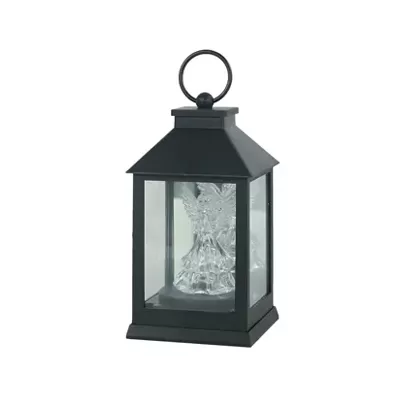
.webp "Ramadan Lanterns ML-6193")