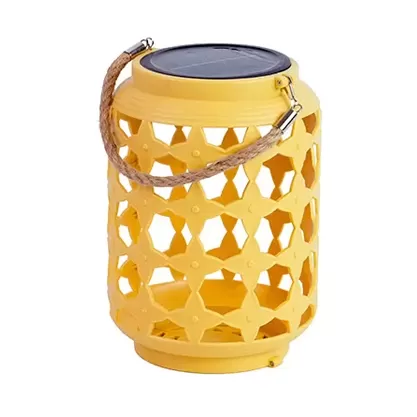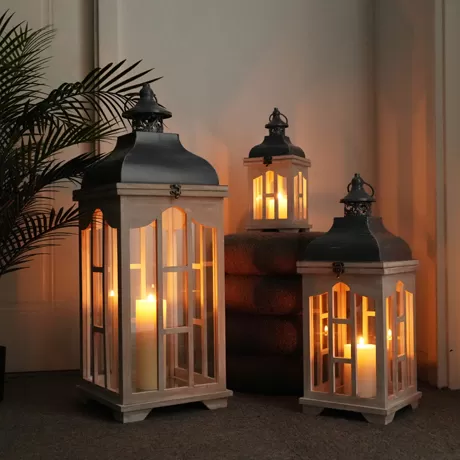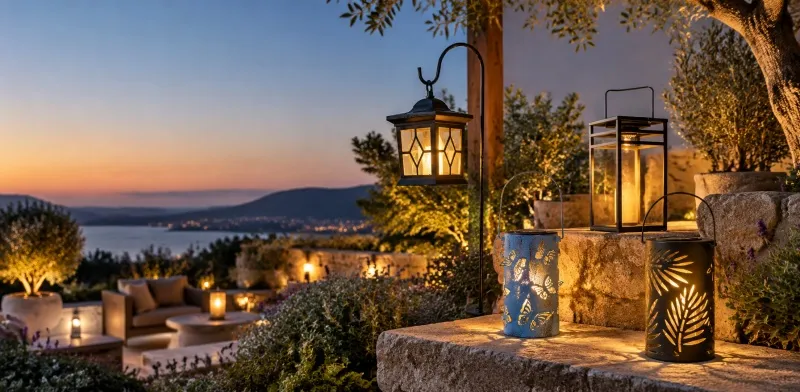
Solar garden lanterns are moving from a seasonal novelty into a more established outdoor décor category. For B2B buyers, however, category growth does not automatically translate into profitable SKUs. The commercial gap between a visually attractive sample and a repeatable, low-return, compliance-ready retail program is usually decided by product engineering, component control and supplier execution.
A 2026 garden-lighting market outlook published by Industry World estimates the global garden lighting market at USD 8.73 billion in 2026 and projects a 6.8% CAGR from 2025 to 2030. The same report estimates that solar garden lights represent 38.2% of global unit sales in 2026, making solar the largest power-supply segment in its dataset.[1] A separate Grand View Research dataset values the solar garden LED segment at USD 2.01 billion in 2025 and projects 10.8% CAGR through 2033.[2] These figures use different market definitions and should not be added together, but both point in the same direction: solar garden lighting is becoming a mainstream assortment consideration rather than a niche add-on.
For a buyer, the important question is therefore no longer simply “Are solar garden lanterns growing?” It is: “Which construction, battery, solar panel, finish, packaging and compliance configuration can survive our target market, price point and return-rate expectations?” This is where foryoudecor positions its solar garden lantern development work: not only around style, but around repeatability, channel fit and procurement risk reduction.
Buyer takeaway: the winning SKU is rarely the product with the biggest solar panel or the lowest FOB price. It is the product whose charging, runtime, weather resistance, appearance, packaging and compliance are aligned with the exact retail channel and climate where it will be sold.
The solar garden lantern category sits at the intersection of three demand trends: outdoor living, decorative lighting and distributed solar technology. Each trend has different commercial implications. Outdoor living increases the number of use occasions; decorative lighting increases design turnover; and solar power removes the need for mains wiring, which expands placement options for gardens, balconies, patios, paths, hospitality terraces and seasonal displays.
Indicator | Latest figure | Scope | B2B implication |
Global garden lighting market | USD 8.73B estimated for 2026; 6.8% CAGR 2025-2030 | Garden lighting, Industry World | Category expansion supports broader assortment planning beyond wired lighting.[1] |
Solar share of garden-light units | 38.2% estimated for 2026 | Garden lighting unit sales, Industry World | Solar is large enough to justify dedicated sourcing standards and SKU architecture.[1] |
Solar garden LED market | USD 2.01B in 2025; 10.8% CAGR to 2033 | Solar garden LED segment, Grand View Research | Independent dataset also indicates above-average growth in solar garden lighting.[2] |
Global solar lighting systems | USD 13.7B estimated for 2026; 12.6% CAGR to 2033 | Broader solar lighting systems market | Technology investment in solar lighting is expanding beyond decorative garden products.[3] |
Global PV deployment | Nearly 3 TW cumulative by end-2025; about 698 GW added in 2025 | All photovoltaic applications, IEA PVPS | Broader PV adoption supports component scale, supplier know-how and continued solar technology diffusion.[4] |
Data note: market research providers define “garden lighting,” “solar garden LED,” and “solar lighting systems” differently. A procurement article should not present these datasets as if they measure the same universe. foryoudecor recommends using them as directional indicators while validating actual demand through channel sell-through, competitor assortment depth, target retail price and local seasonality.
Retail chains increasingly need solar lanterns that can work as a coordinated collection: hanging lanterns, tabletop lanterns, path lights and decorative stakes in related finishes and materials.
E-commerce sellers need stronger packaging and more predictable out-of-box function because visible damage, weak charging or short runtime quickly becomes a review and return-rate problem.
Garden centers and DIY channels need weather-relevant specifications, not generic “waterproof” language.
Private label brands need exclusive color, pattern, packaging and structural options without losing mass-production consistency.
Hospitality buyers care about visual consistency across multiple tables or landscape zones and may prioritize replaceable components and maintenance simplicity.
A useful B2B assortment starts by separating products by installation method and commercial use. The same decorative design may require different engineering if it is placed on a restaurant table, hung from a garden hook or installed beside a pathway.
Format | Typical channel | Critical buyer concerns | Common material direction | OEM/ODM opportunity |
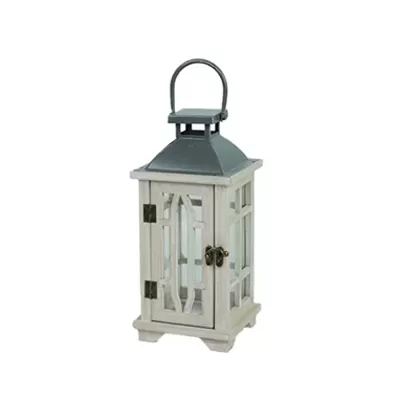
Hanging solar lantern | Garden centers, home décor, e-commerce | Handle strength, balance, panel orientation, rain exposure | Metal, stainless steel, coated iron, plastic accents | Cut-out patterns, handle design, finish, flame-effect LED |
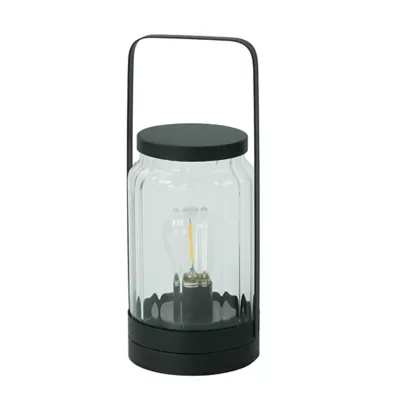
Tabletop solar lantern | Home décor, hospitality, retail chains | Stable base, glare control, finish durability, charging position | Metal + glass/plastic diffuser | Finish, glass texture, size family, packaging |
Solar path / stake lantern | DIY, garden centers, seasonal programs | Ground stability, stake strength, drainage, mower impact risk | Metal/plastic stake + lantern head | Stake height, head design, pack quantity |
Decorative solar wind lantern | Home & garden, seasonal décor | Visual effect, silhouette, light distribution, corrosion | Powder-coated metal, stainless steel, punched metal | Pattern library, color, panel size, LED effect |
For foryoudecor buyers, this product architecture matters because it allows one design language to be developed into several price points and placement scenarios. A coherent family can improve shelf storytelling while reducing the cost of developing unrelated SKUs one by one.
A solar lantern RFQ that only specifies product size, color and target price leaves too many variables uncontrolled. The following specifications should be agreed before sample approval or, at minimum, before a purchase order is released.
1. Solar panel specification: Ask for cell type, panel dimensions, rated output, orientation and charging assumptions. Panel area alone is not a performance guarantee. Low-light performance, shading tolerance and the relationship between panel output and battery capacity matter more than a cosmetic “large panel” claim.
2. Battery chemistry and usable capacity: Specify chemistry (for example Ni-MH or Li-ion where applicable), nominal voltage, capacity in mAh and preferably Wh, protection requirements, expected cycle performance and temperature limits. The battery is frequently one of the largest drivers of customer complaints when runtime degrades too quickly.
3. Charging time and test conditions: A statement such as “6-8 hours charging” is meaningless unless the irradiance and test method are understood. foryoudecor recommends agreeing on a practical benchmark under defined light conditions and documenting the sample result.
4. Runtime after full charge: Define the expected operating duration, LED mode and end-of-discharge behavior. For flame-effect LEDs, record whether the runtime claim refers to continuous flicker mode or another program.
5. LED output and color: Set the target light effect: decorative ambient glow, flame simulation or functional path lighting. Specify CCT where relevant, visible brightness expectation and batch color consistency.
6. Ingress protection and drainage: Use an IP rating as a measurable enclosure reference rather than the vague word “waterproof.” IEC 60529 defines the IP code system.[10] The correct target depends on exposure. Drainage, venting and water paths should also be reviewed because a laboratory enclosure rating does not replace good outdoor structural design.
7. Corrosion resistance: For metal solar garden lanterns, align substrate, pretreatment, coating system, coating thickness and test protocol with the market. Salt-spray test duration can be specified using an agreed method such as ISO 9227 or ASTM B117, but buyers should remember that laboratory hours do not translate directly into guaranteed years outdoors.
8. Switch and sensor behavior: Confirm dusk-to-dawn logic, switch position, shipping mode, sensitivity and whether the product can accidentally turn on inside the carton. For e-commerce, an unclear switch or sensor is a high-cost user-experience defect.
9. Mechanical strength: Check handle welds, hanging points, stake joints, screw connections, panel housing retention and sharp edges. Decorative products still need transport and handling robustness.
10. Packaging performance: Agree individual protection, carton quantity, barcode placement, instruction sheet, battery transport markings where applicable, drop-test expectations and whether the pack can survive parcel delivery as well as palletized retail distribution.
A common sourcing failure happens when a buyer approves one good sample and assumes mass production will reproduce it automatically. Solar lanterns combine decorative metalwork with electronics, batteries, light sensors and outdoor exposure. Variation in any one component can change the customer experience.
For example, two visually identical lanterns can perform differently because the batteries come from different lots, the solar panel output is not controlled tightly, the sensor is mounted at a different angle, the coating pretreatment varies, or the gasket is compressed differently during assembly. This is why foryoudecor treats solar garden lantern quality as a system rather than a final-appearance inspection only.
QC stage | What to verify | Why it matters | Typical evidence |
Incoming components | Panel, battery, LED, sensor, coating materials, dimensions | Prevents weak components from being hidden inside a finished product | Supplier specs, sampling checks, component test records |
Pre-production sample | Appearance + electrical function + packaging | Locks the golden sample before volume work starts | Approved sample and signed specification |
In-process inspection | Assembly fit, wiring, welds, finish, switch function | Catches systemic defects before the entire batch is completed | Line inspection photos and defect records |
Functional sampling | Charging, auto on/off, runtime, LED consistency | Verifies that electrical performance matches the approved standard | Sampling log and test result |
Final AQL-based inspection | Appearance, function, quantity, packaging, labels | Provides shipment-level quality control instead of relying on factory self-check only | Inspection report and defect classification |
foryoudecor uses experienced sales and QC teams and positions AQL-based inspection as part of its shipment control process. The commercial objective is straightforward: reduce the gap between the approved sample and the units that arrive in the buyer’s warehouse.
Compliance for solar garden lanterns depends on product configuration and destination market. Buyers should avoid treating a logo printed on a carton as proof that every applicable obligation has been addressed. A compliance file should be built around the actual model, components and claims.
EU topic | Why it can matter | Buyer action | Source |
GPSR — Regulation (EU) 2023/988 | General safety framework for consumer products; applies since 13 Dec 2024 | Confirm risk assessment, traceability, manufacturer/importer information and online-sales information where relevant | [5] |
RoHS — Directive 2011/65/EU | Restricts certain hazardous substances in electrical and electronic equipment | Confirm model/material scope and obtain appropriate compliance evidence | [6] |
WEEE — Directive 2012/19/EU | Covers waste electrical/electronic equipment; the directive includes small equipment with integrated photovoltaic panels in its examples | Importer/producer registration and end-of-life obligations vary by EU market; verify country implementation | [7] |
EU Batteries Regulation 2023/1542 | Relevant to batteries placed on the market or incorporated into products | Verify battery chemistry, labelling/documentation and applicable phased obligations | [8] |
Energy labelling for light sources | EU 2019/2015 has specific scope and exemptions | Do not assume every solar garden lamp needs an A-G label. Battery-operated products, explicitly including solar-powered garden lamps, are listed in an exemption from the light-source energy-labelling scope; confirm model-specific applicability | [9] |
Important: compliance requirements change by product architecture, battery type, claims and destination. foryoudecor can support compliance-ready development and documentation coordination, but the importer should still confirm the final legal scope for the target market and sales channel.
A single “best” solar garden lantern specification does not exist. The correct configuration depends on the economics of the channel. foryoudecor uses channel logic to help buyers avoid over-engineering a discount SKU or under-engineering a premium private-label program.
Buyer type | What usually drives selection | Risk to control | Recommended development emphasis | How foryoudecor can support |
Importer / distributor | Landed cost, assortment breadth, repeatability | Too many similar SKUs; inconsistent batches | Good-better-best architecture, mixed décor families | Broad product library, combination loading, OEM color/size options |
Retail chain | Retail price, shelf impact, packaging, compliance | Returns, barcode/packaging errors, seasonal deadline | Pack-ready samples, testing file, visual family | Packaging customization, QC coordination, repeat programs |
E-commerce seller | Hero-image appearance, parcel survival, reviews | Transit damage, confusing setup, weak runtime | Stronger inner pack, clear instructions, functional sampling | Private label packaging and e-commerce-oriented QC |
Private label brand | Differentiation, exclusivity, brand consistency | Commodity look; supplier copying; uncontrolled substitutions | Custom pattern, finish, proportions, component lock | OEM/ODM development, material/finish alternatives, golden sample |
Hospitality buyer | Atmosphere, consistency, low maintenance | Uneven light, short lifespan, replacement complexity | Stable finish, simple operation, maintenance planning | Coordinated tabletop/hanging families, repeat-order control |
Price matters, but price without development depth can become expensive after returns, claims, redesigns and missed seasons. A stronger supplier evaluation asks whether the supplier can manage a product family over time, not merely produce one approved sample.
Product development depth: Can the supplier offer meaningful changes in structure, finish, pattern, panel, battery, packaging and size, or only logo printing?
Category breadth: Can one supplier help build a coordinated outdoor décor story, reducing fragmentation across lanterns, candle holders, planters and related home-and-garden items?
Showroom/sample speed: Can buyers compare multiple physical directions quickly before committing engineering resources?
QC ownership: Is quality checked at component, in-process and final stages, or only visually at the end?
Traceability and documentation: Can the supplier keep model specifications, packaging files, test references and golden samples under version control?
Repeat-order discipline: Can the supplier control color, finish, light effect and component substitutions when the same SKU is reordered months later?
Export experience: Does the team understand packaging, labeling, documentation and buyer expectations in the target region?
foryoudecor has been active in home and garden décor since 2005, giving the team more than 20 years of category and OEM experience.[11] This matters in solar garden lantern sourcing because the product is not purely electronic and not purely decorative: buyers need both appearance control and manufacturing discipline.
foryoudecor capability | Published company fact | B2B value |
20+ years in home décor | Company history since 2005 | Experience with seasonal programs, decorative finishes and repeat-order requirements |
2,000+ sqm Shanghai showroom | Physical showroom with broad home-and-garden collections | Faster assortment building and side-by-side sample comparison |
Around 10,000 product options | Extensive product library across home and garden décor | Supports one-stop category sourcing and coordinated collections |
200+ new designs annually | Ongoing design development | Useful for buyers who need regular newness rather than static catalogs |
Customers in 66 countries | Export reach across multiple regions | Broader familiarity with regional buyer expectations |
Long-term retail relationships | Company states 30% of long-term retail partners have worked with it for over 10 years | Indicator of continuity and repeat-program capability |
Dedicated sales and QC teams | Published as a core operating capability | Faster communication plus more structured quality follow-up |
For solar garden lantern programs, foryoudecor can combine these broader home-and-garden capabilities with OEM/ODM options such as color, size, cut-out pattern, logo, packaging, glass or diffuser treatment, metal finish, handle/stake structure and selected electrical configurations. The objective is to help importers and retail buyers create a sellable assortment rather than purchase disconnected factory items.
Another advantage is range-building. A buyer may begin with one metal solar wind lantern and then extend the same visual language into hanging lanterns, tabletop candle holders, planters or other garden décor. foryoudecor can use its wider assortment to help maintain a more coherent retail collection and consolidate purchasing where commercially sensible.
The most efficient OEM process is not “send logo → receive price.” A more reliable workflow separates design decisions from performance decisions and locks both before mass production.
Share the country, channel, target FOB/EXW range, expected retail price, annual volume and launch date. This prevents unnecessary engineering that the channel cannot absorb.
Choose hanging, tabletop, stake or hybrid format; define material, dimensions, visual direction and desired panel location.
Agree battery, solar panel, LED mode, runtime target, sensor logic, weather exposure and corrosion expectations.
Confirm color, finish, pattern, logo position, packaging, instruction sheet, barcode and master-carton requirements.
Approve appearance and function together. The sample should become the reference for bulk production, not just a sales sample.
Control component substitutions, coating system, key dimensions and packaging materials.
Use functional sampling plus appearance/packaging checks and AQL-based final inspection.
Feed returns, reviews, charge/runtime feedback and packaging damage back into the next production cycle.
Buying on appearance alone: A beautiful perforated metal shell cannot compensate for an undersized battery, weak panel or inconsistent sensor.
Accepting “waterproof” without a test definition: Use measurable enclosure and structural requirements. Ask how water drains and where it can collect.
Comparing suppliers only by battery mAh: Capacity numbers are useful but not sufficient. Chemistry, actual cell quality, charge control and LED load determine real performance.
Approving one sample but not locking components: A supplier may change battery, LED or panel sources if the BOM is not controlled.
Using the same packaging for pallet retail and parcel e-commerce: E-commerce needs stronger individual protection and clearer setup instructions.
Treating compliance as a certificate folder: Compliance must match the exact model, battery and market. A generic report for a similar product is not the same as model-relevant evidence.
Launching too many designs before demand is proven: A controlled collection with a good-better-best architecture often gives cleaner inventory learning than a large first order spread across weakly differentiated SKUs.
Before requesting a formal quotation from foryoudecor or another supplier, send a brief that answers the following questions. It will make quotations more comparable and reduce sample revisions.
Target country / region and sales channel
Expected order quantity per SKU and annual volume
Target FOB / EXW range and target retail price
Lantern format: hanging, tabletop, stake, pathway or mixed use
Material and finish direction
Product dimensions and weight limits
Solar panel requirements or target charging performance
Battery chemistry / capacity preference and runtime target
LED mode, brightness expectation and color temperature / flame effect
Outdoor exposure and target IP / drainage requirements
Corrosion or salt-spray requirement for metal models
Logo, color, cut-out pattern and structural customization
Individual box / color box / mail-order packaging requirements
Barcode, instruction language and compliance marking requirements
Required compliance documents / test reports
Launch date, sample deadline and shipment deadline
Industry World estimates the broader global garden lighting market at USD 8.73 billion in 2026 and solar garden lights at 38.2% of unit sales. Grand View Research separately estimates the solar garden LED segment at USD 2.01 billion in 2025 with 10.8% CAGR to 2033. The scopes differ, but both indicate continued category growth.
Check the performance package before the price: solar panel output, battery specification, runtime, charging conditions, sensor logic, weather protection, corrosion system and whether the supplier will lock those components for mass production.
There is no single correct IP rating for every garden lantern. Specify the exposure condition and use IEC 60529 as the reference system for enclosure protection.[10] Sheltered tabletop use and fully exposed pathway use may justify different targets. Structural drainage should be evaluated in addition to the IP claim.
The correct runtime depends on the LED load, battery, solar panel and intended experience. For procurement, do not rely on a marketing number alone. Define a test condition, LED mode and minimum accepted runtime, then verify it on approved samples and production sampling.
Not automatically. Regulation (EU) 2019/2015 lists light sources in battery-operated products, explicitly including solar-powered garden lamps, among exclusions from its light-source energy-labelling scope.[9] Buyers should still confirm the exact product configuration and other applicable EU requirements.
Yes. foryoudecor supports home-and-garden OEM/ODM development and can work on color, size, pattern, finish, logo, packaging and selected structural/electrical configurations. The recommended process is to lock both the appearance sample and the performance/BOM specification before production.
For buyers building a broader assortment, foryoudecor combines more than 20 years of home décor experience, a 2,000+ sqm Shanghai showroom, around 10,000 product options, 200+ new designs annually, export experience across 66 countries and dedicated sales/QC support.[11] This can simplify range building and reduce coordination across multiple suppliers.
Send target market, sales channel, expected quantity, target price, dimensions, material/finish, runtime, battery/solar requirements, weather exposure, customization, packaging, compliance needs and launch deadline. A detailed RFQ produces a more meaningful quotation than a photo plus target price.
The 2026 market data supports continued interest in solar garden lighting, but market growth alone will not protect a buyer from weak batteries, inconsistent runtime, corrosion, water ingress, packaging damage or compliance gaps. The commercial advantage comes from converting a decorative idea into a controlled specification that can be reproduced across thousands of units.
That is the role foryoudecor aims to play for importers, wholesalers, retail chains, distributors, e-commerce sellers, private label brands and hospitality buyers. With more than 20 years in home and garden décor, a large Shanghai showroom, an extensive product library, ongoing new-product development and dedicated sales/QC support, foryoudecor can help buyers move from early concept and sample selection to OEM/ODM development, packaging, inspection and repeat-order management.
Planning a 2026-2027 solar garden lantern program? Request the latest foryoudecor wholesale catalog, send your target price and market requirements, or ask for an OEM/ODM evaluation. Contact: foryou@foryoudecor.com
Solar Garden Lantern / Outdoor Lantern product category page
OEM/ODM Home & Garden Décor service page
Quality Control / AQL inspection page
Company Profile / 2,000+ sqm showroom page
Packaging & compliance guide for European importers
Contact / Request Catalog page


 English
 français
 Deutsch
 italiano
 русский
 العربية
 Türkçe
 čeština
 dansk
dansk Suomi
Suomi Polska
 magyar
 Svenska
 norsk
norsk română
 slovenský