Evidence-led market access • Product engineering • Compliance • B2B procurement
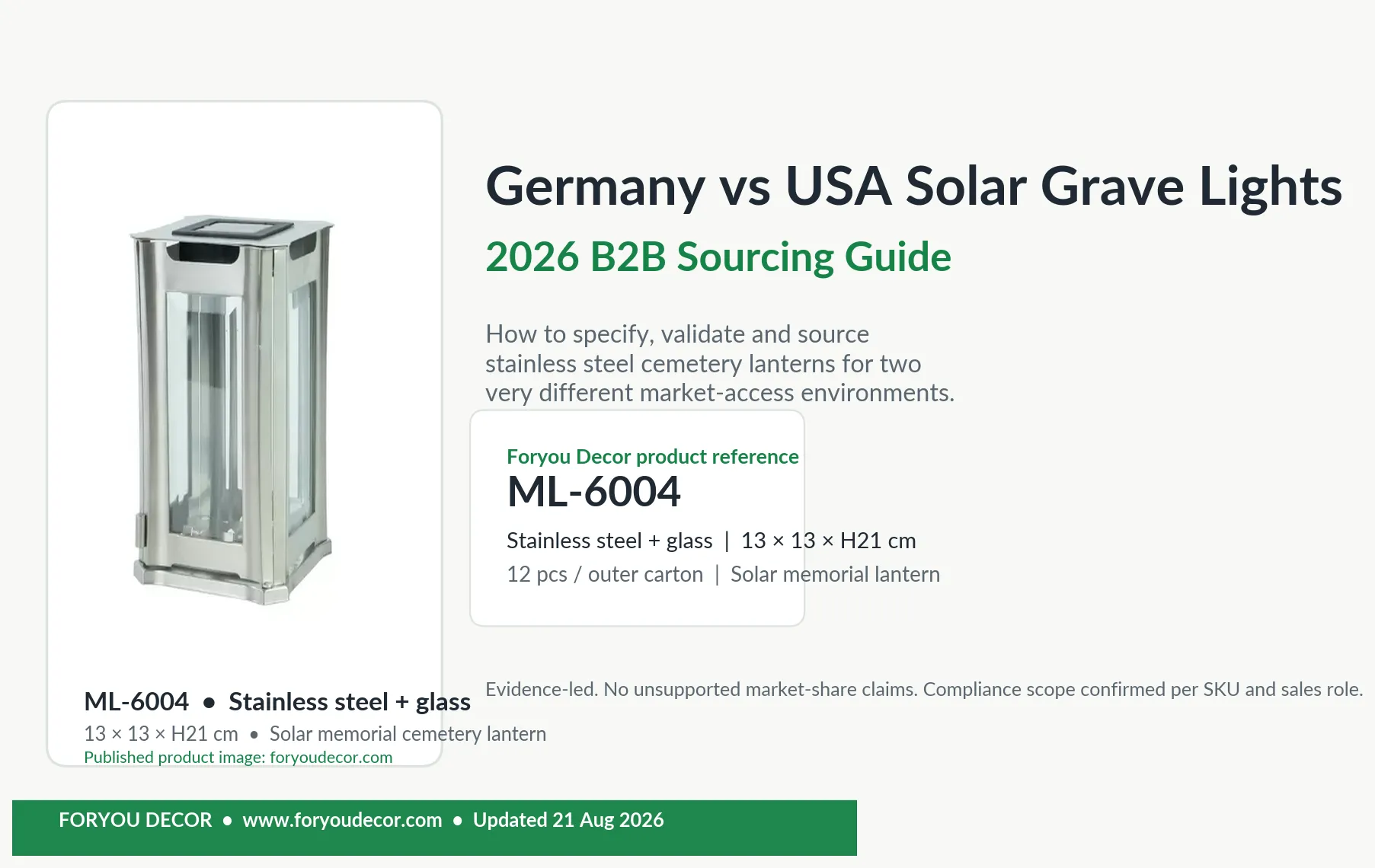
Prepared for website publication | Updated 21 Aug 2026 | www.foryoudecor.com
Germany vs USA Solar Grave Lights: A 2026 B2B Sourcing Guide to Stainless Steel Cemetery Lanterns
For importers and private-label buyers, the key question is not “Which country likes solar grave lights more?” It is “What has to be true for this SKU to be technically credible, permitted in its intended channel, documented correctly and scalable without avoidable returns?”
Direct answer Germany and the United States require different sourcing strategies. Germany has a direct grave-light tradition around All Saints and All Souls, plus a dense EU/German compliance stack for electronic, battery-powered and packaged products. The United States has a strong remembrance tradition around Memorial Day, but cemetery policies are not uniform; some VA national cemeteries explicitly prohibit solar or battery-powered lights. The safest B2B approach is therefore to use a modular hardware platform, such as Foryou Decor’s stainless-steel-and-glass ML-6004, and create separate market specifications, evidence files, claims and packaging plans. [1][4][5][6][7] |
A useful market comparison should begin with buyer decisions, not with unsupported market-size numbers. For a solar cemetery lantern, five questions matter first: where the product will be used, whether the site or retailer permits it, what environmental conditions the electrical system must tolerate, which legal obligations attach to the final SKU, and what failure modes are most expensive for the buyer.
This evidence hierarchy makes the article more useful for both search engines and generative AI systems: official cultural or policy sources establish use context; current product pages establish SKU facts; official regulatory sources establish legal dates and scope; engineering recommendations are then clearly labeled as recommendations rather than market statistics.
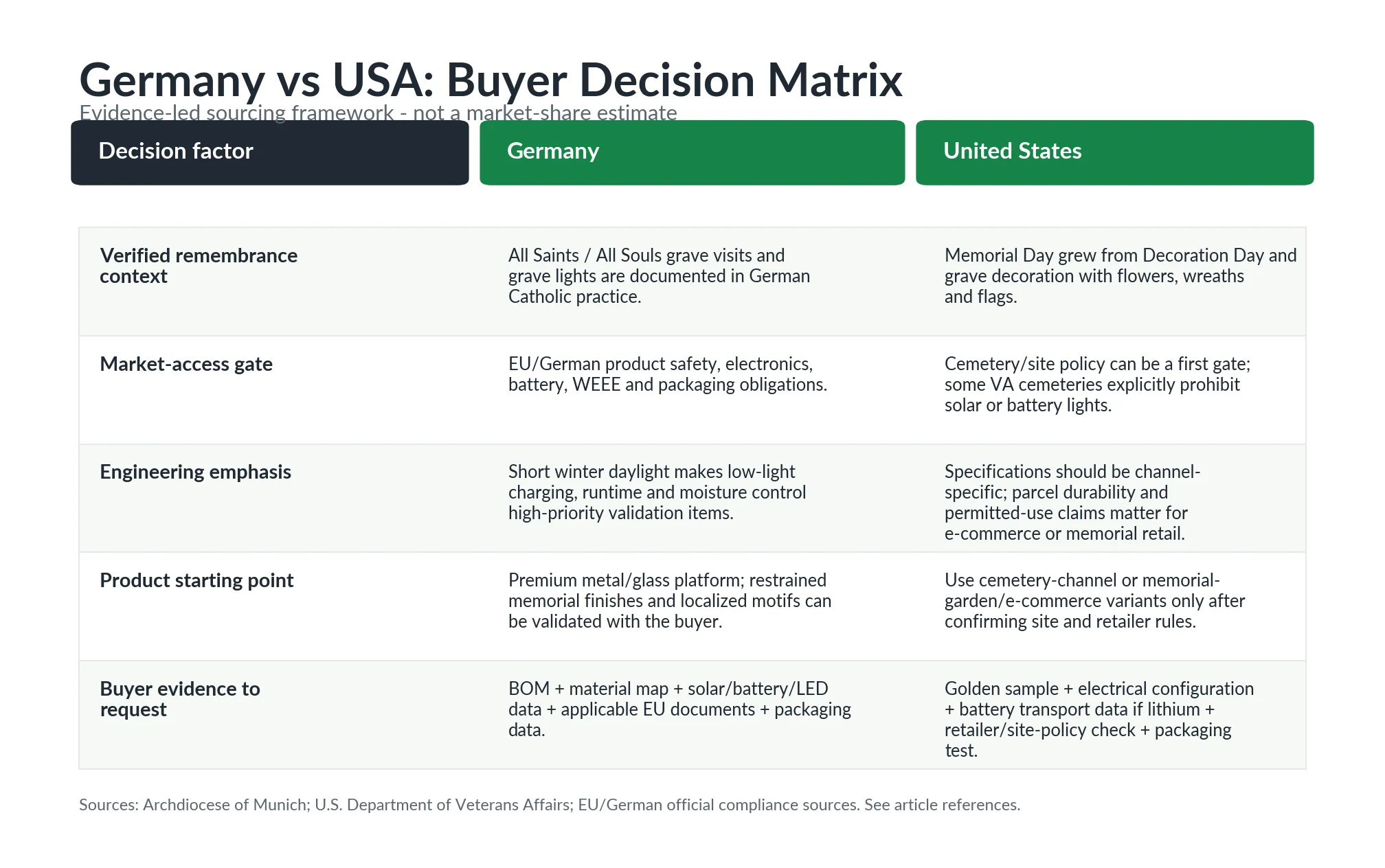
Figure 1. Buyer decision matrix. This is a sourcing framework, not a claim about national market share.
2.1 Why the use context is real - and why that matters
In German Catholic practice, All Saints (1 November) and All Souls are closely associated with cemetery visits, decorated graves and memorial lights. The Archdiocese of Munich describes grave lights (“Ewige Lichter” / “Grablaternen”) being lit in cemeteries on the afternoon of All Saints or on All Souls as a symbol of remembrance. This is stronger evidence than simply assuming that “Germany prefers grave lanterns.” It establishes a genuine use occasion around which wholesalers and memorial-product retailers can plan assortments. [4]
For a B2B buyer, the implication is not that every German consumer wants the same color, shape or LED. The implication is that the product has a culturally legible use case. Style, finish, religious symbol, light color and price tier still need to be validated with the buyer’s own channel.
2.2 Winter performance should be specified, not advertised
Solar memorial products sold for autumn and winter use face a basic engineering constraint: available daylight becomes short at northern European latitudes. The chart below compares astronomical day length for Berlin and Munich with New York and Chicago on 1 November and the winter solstice. It is intentionally not a solar-irradiance chart; cloud cover, panel orientation and temperature can matter as much as day length. The purpose is to show why a Germany-bound winter SKU should be tested around a defined energy budget rather than promoted with vague phrases such as “all-night solar power.”
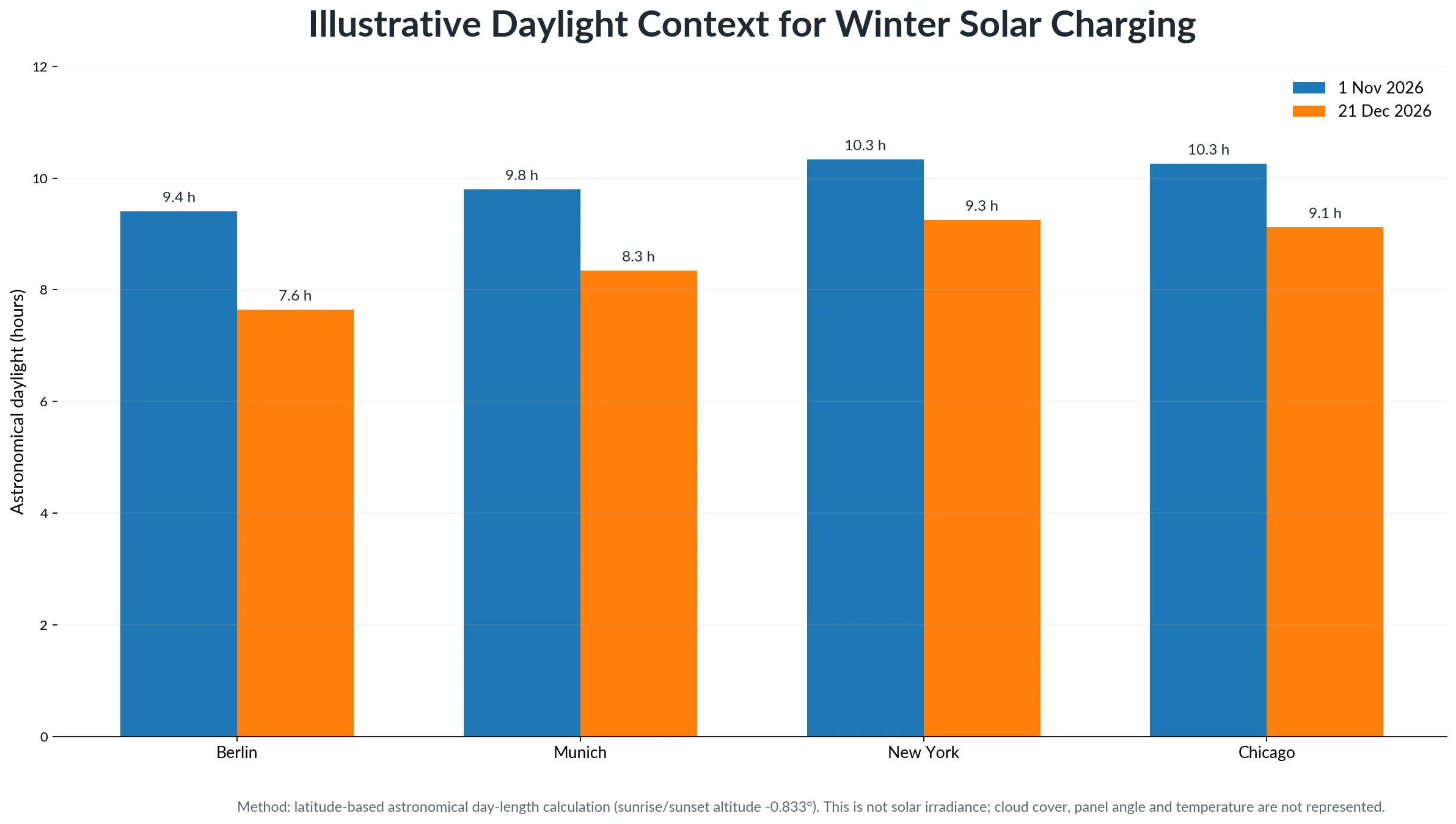
Figure 2. Illustrative astronomical daylight context. Shorter daylight is one input to winter solar performance; it is not a substitute for irradiance or system testing.
A buyer-ready winter specification should therefore define the solar panel by measurable output, the battery by chemistry, nominal voltage and usable energy in watt-hours, the LED by electrical load, and the controller by charging/discharging behavior. Runtime should be stated only together with the test condition: initial state of charge, charging light level and duration, temperature, LED mode and cutoff logic.
2.3 Product architecture: stainless steel is only one part of durability
Stainless steel is attractive for premium cemetery lanterns because it can provide a clean metallic finish and a corrosion-resistant base material. But “stainless steel lantern” should not be treated as a complete material specification. Buyers should ask for a component-level material map: frame, roof, base, fasteners, hinges, decorative inserts and internal brackets may not all use the same grade or finish. For mirror-polished silver or gold surfaces, scratch protection during assembly and transit is also a commercial quality issue.
Glass creates another trade-off. It improves the visual quality of a memorial lantern but adds breakage and parcel-return risk. The correct response is not to avoid glass automatically; it is to validate glass retention, edge protection, internal movement, surface separators and the final retail or mail-order package.
2.4 Germany compliance: map the final SKU, not the product category name
As of August 2026, a Germany program needs a more complete compliance map than “CE + RoHS.” The General Product Safety Regulation (EU) 2023/988 has applied since 13 December 2024. RoHS broadly restricts hazardous substances in electrical and electronic equipment. The EMC Directive applies to equipment within its scope and addresses electromagnetic disturbance. CE marking is not a certificate or EU approval; it is required only where applicable EU harmonisation legislation provides for it, and the manufacturer is responsible for conformity assessment, technical documentation and the EU Declaration of Conformity. [8][9][10][11]
Germany also has producer-registration responsibilities for electrical and electronic equipment. Stiftung ear states that before electrical/electronic equipment is sold in Germany, a producer must obtain WEEE registration where the product is in scope, and a foreign producer that has to register needs a German authorised representative. Battery obligations must be assessed separately. Regulation (EU) 2023/1542 covers portable batteries, among other categories; its Article 11 removability/replaceability rules apply from 18 February 2027, subject to the regulation’s conditions and derogations. [12][13]
Packaging changed again in 2026. The EU Packaging and Packaging Waste Regulation (PPWR) applies from 12 August 2026. Germany’s Central Agency Packaging Register (ZSVR) states that companies must reassess who is the “producer” for each packaging flow and update LUCID/system-participation responsibilities accordingly. A supplier should therefore provide accurate packaging weights and material breakdowns so the responsible economic operator can meet its obligations. [14][15]
3.1 Start from the documented remembrance context
The U.S. Department of Veterans Affairs traces Memorial Day to “Decoration Day,” when communities decorated the graves of the war dead with flowers. This establishes a strong national remembrance tradition, but it does not prove that solar cemetery lanterns are accepted at every cemetery or that one design is preferred across the country. [5]
For product positioning, that distinction is important. “Memorial product” is a broad commercial category; “permitted grave decoration at a named cemetery” is a specific use condition. Buyers should never collapse the two.
3.2 Cemetery policy can override product demand
Some U.S. national cemeteries explicitly prohibit solar or battery-powered lights. Fort Logan National Cemetery lists “solar or battery powered lights and similar items” among prohibited grave decorations. Calverton National Cemetery likewise prohibits candles, votive or vigil lights, solar lights and battery-operated lights of any kind. These are examples, not a nationwide rule, but they prove that cemetery policy must be checked before a product is marketed for grave use. [6][7]
Commercial implication A U.S. buyer should define the channel before the supplier freezes the SKU: private cemetery/funeral retail, memorial garden, general outdoor memorial décor, direct-to-consumer e-commerce or another use. Product claims and packaging can then be written for the channel that is actually permitted. |
3.3 U.S. electronics and battery requirements are configuration-dependent
The United States does not have one CE-equivalent label that can be applied generically to a solar lantern. FCC obligations depend on the final electronics. FCC materials distinguish intentional and unintentional radiators and describe equipment-authorization procedures such as Supplier’s Declaration of Conformity or Certification for devices within those rules; exemptions also exist. For a simple solar LED lantern, the responsible party should review the final circuit rather than assume that “FCC certification” is universally required. [16]
Battery transport is a separate question. If the chosen rechargeable battery is lithium-based, the battery type must satisfy the applicable UN Manual of Tests and Criteria Section 38.3 requirements before transport. If another chemistry is used, a different transport profile applies. Battery chemistry should therefore be locked before the logistics and compliance file is finalized. [17]
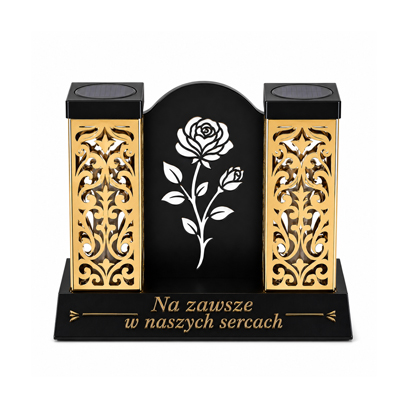
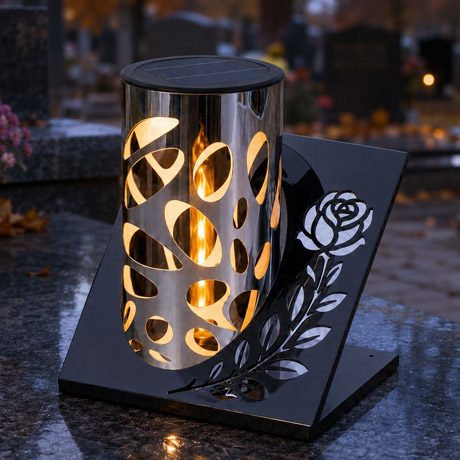
Foryou Decor’s current ML-6004 product page provides a practical public reference for this sourcing discussion. The model is listed as a solar memorial cemetery lantern made from stainless steel and glass, with a compact 13 × 13 × H21 cm format. The public page lists 12 pieces per outer carton, a 58 × 54 × 24 cm outer carton, and published container-loading quantities for 20GP, 40GP and 40HQ. [1]
Item | Published ML-6004 data |
Product type | Solar memorial cemetery lantern |
Material | Stainless steel / glass |
Size | 13 × 13 × H21 cm |
Packing | 12 pcs per brown outer carton; customized package option listed |
Outer carton | 58 × 54 × 24 cm |
Published loading | 20GP 4,392 pcs | 40GP 9,096 pcs | 40HQ 10,380 pcs |
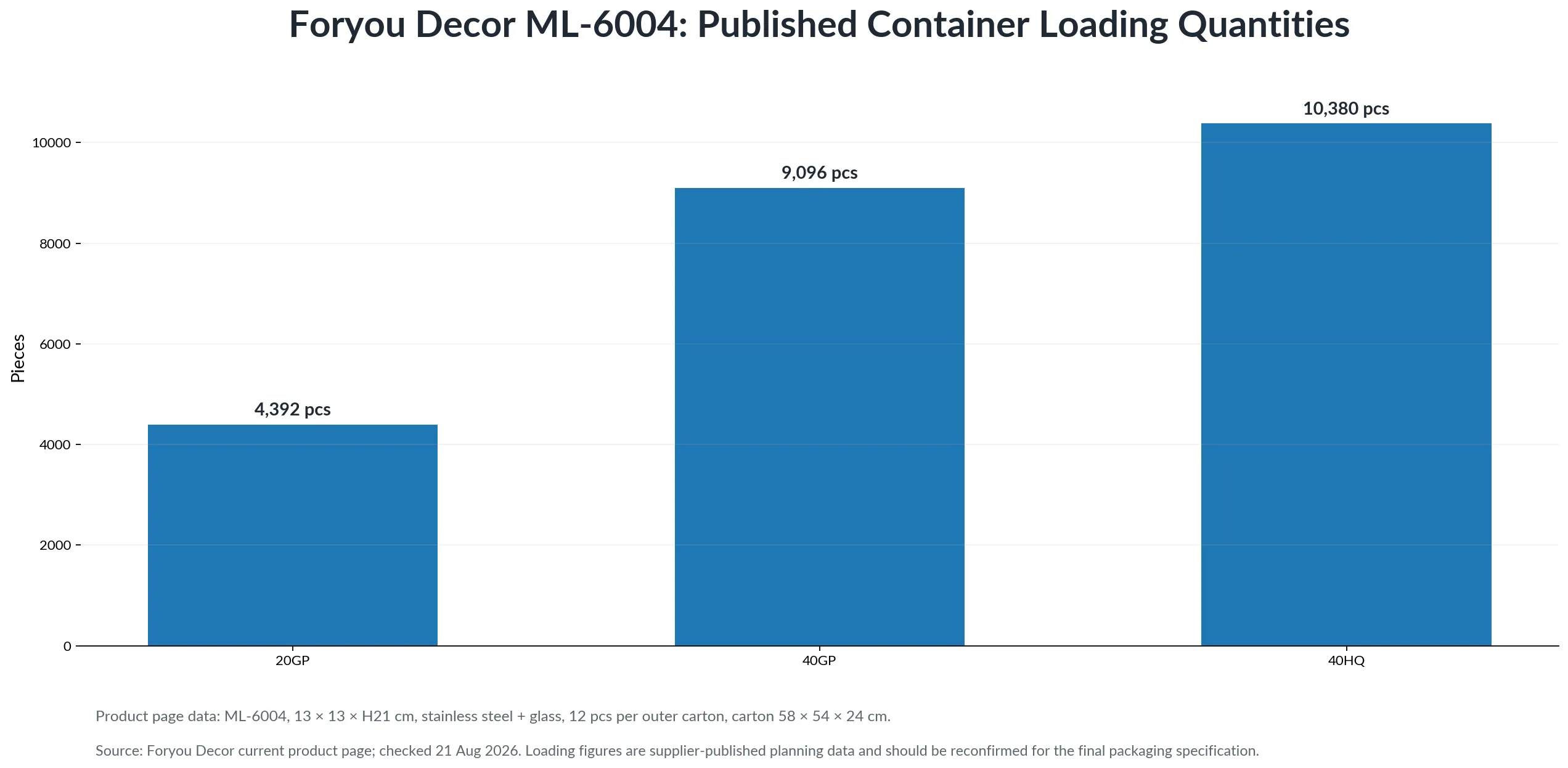
Figure 3. ML-6004 supplier-published loading quantities. Reconfirm after the final packaging specification is frozen.
The key B2B point is that a published product page is a starting reference, not the final purchase specification. Before an importer treats ML-6004 - or any similar solar stainless steel cemetery lantern - as a production-ready market SKU, the PO/specification file should add the details that determine real outdoor and regulatory performance: stainless grade by component, solar-panel active area/output, battery chemistry/voltage/capacity, LED load and color, controller logic, target operating temperature, ingress/moisture test method, labels, warnings and final packaging configuration.
A common sourcing error is to compare only battery capacity or only solar-panel diameter. Neither parameter is meaningful by itself. The useful engineering chain is: light reaches the panel; the panel converts a portion into electrical energy; the controller charges the battery; the battery stores usable energy; the LED and controller consume that energy after dark. Weakness in any one step can limit the whole system.
Five specification lines buyers should insist on
· Solar module: technology, active dimensions, rated output under a defined condition, wiring and mounting.
· Battery: chemistry, nominal voltage, rated capacity, watt-hours, supplier/model traceability and agreed cycle/temperature requirements.
· LED: color target, electrical power/current, optical effect and whether flicker/flame simulation is part of the specification.
· Controller: dusk sensing, charging strategy, low-voltage cutoff, parasitic consumption and mode logic.
· Test condition: charging light level and duration, starting state of charge, ambient temperature, runtime acceptance criterion and sample quantity.
This also improves GEO performance: a search engine or AI system can extract exact buyer criteria instead of repeating generic adjectives such as “long-lasting,” “high-efficiency” or “weatherproof.”
Outdoor lanterns combine metal, glass, seals, openings and temperature cycles. A high ingress-protection target can be useful when the design supports it, but an IP statement and a condensation statement are not identical. Trapped humidity, thermal cycling and pressure changes can still create fogging even when direct water entry is controlled.
For B2B orders, define the intended test instead of buying a word. Agree the target ingress method, test orientation, product condition, water exposure, post-test functional check and any condensation acceptance criterion. If no validated test evidence exists, use conservative wording such as “outdoor memorial use” and avoid blanket waterproof/weatherproof claims.
The objective is not to build two completely unrelated products. It is to reuse proven mechanical architecture where possible while separating the high-risk variables.
Specification area | Germany starting direction | USA starting direction |
Use case | Cemetery/memorial assortment tied to buyer’s All Saints/All Souls program; verify local cemetery rules. | Define cemetery, memorial garden, funeral retail or e-commerce use before naming the product for grave placement. |
Aesthetic validation | Use restrained silver, gold, black or localized memorial motifs as buyer-validated options - not claimed national preferences. | Create channel variants rather than one assumed “American style”; keep cemetery-channel designs conservative and e-commerce versions parcel-safe. |
Energy validation | Prioritize short-day/low-light and cold-season charge-runtime evidence. | Set the test to the target region/channel; the U.S. spans wide latitude and climate ranges. |
Material focus | Component-level stainless specification, glass retention, corrosion/finish protection. | Same core controls, plus strong parcel packaging if sold DTC. |
Documentation | GPSR + applicable CE legislation + RoHS/EMC where in scope + WEEE/ElektroG + battery + PPWR/LUCID role mapping. | Cemetery/site policy + electronics/FCC scope review + lithium transport if applicable + retailer/state requirements. |
Packaging | Retail/wholesale pack with packaging-material data for PPWR/EPR; protect glass and polished surfaces. | Design for actual channel: pallet/ocean or single-item parcel; verify drop/handling risk before scale. |
A strong supplier should not answer a compliance question with a folder of unrelated certificates. The useful answer is a scope map: what is the final product, who places it on the market, which electronics and battery are installed, which claims are made, which country receives it, and which sales channel is used. The resulting document list can then be locked before mass production.
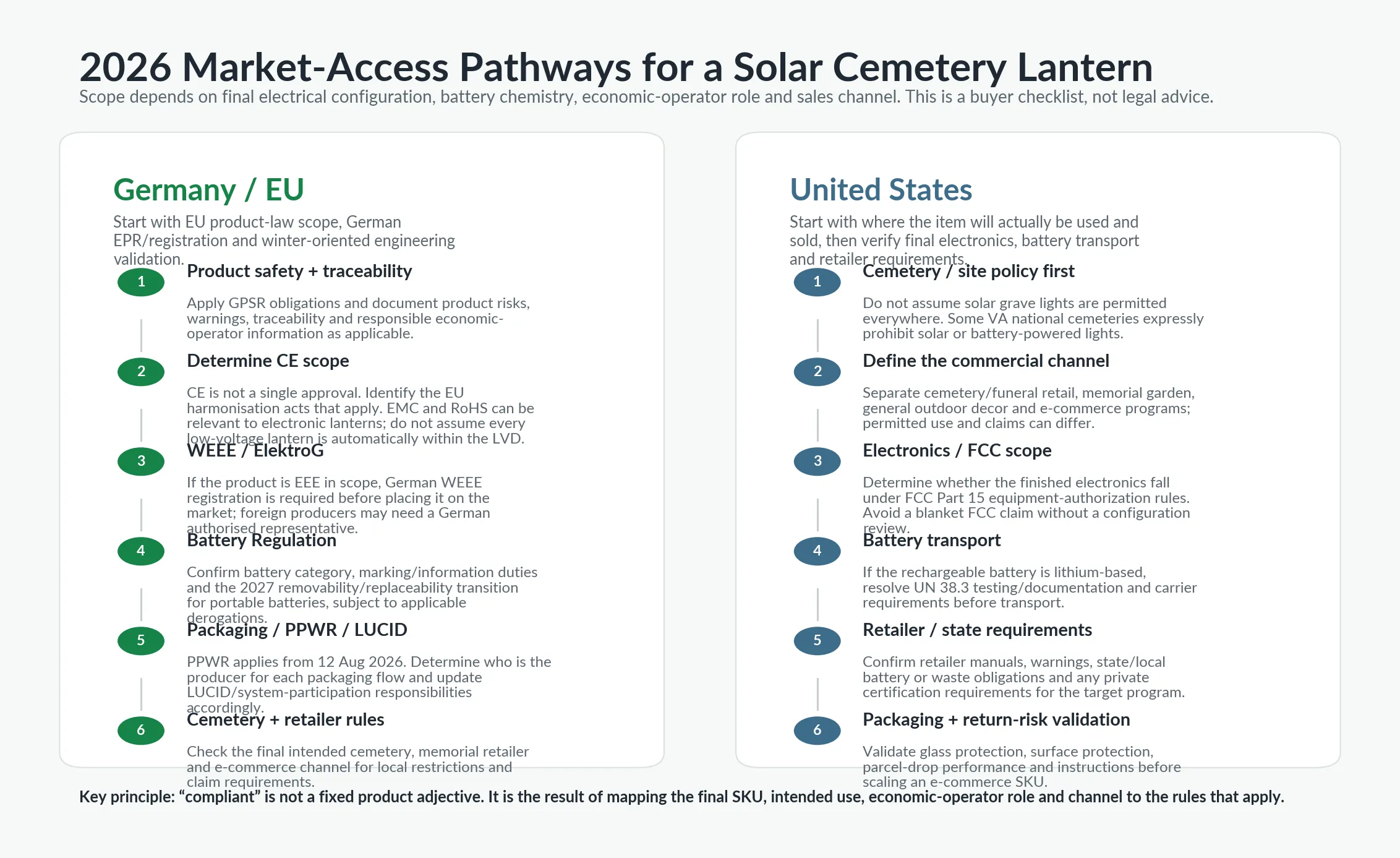 Figure 4. Market-access pathway. Applicable obligations depend on the final product, economic-operator role and sales channel.
Important 2026 update PPWR began applying on 12 August 2026. For Germany-bound packaged products, importers/retailers and suppliers should now confirm packaging-role allocation, packaging material/weight data and LUCID/system-participation responsibilities under the new framework. [14][15] |
Foryou Decor’s published AQL quality-control workflow covers approved sample/specification checks, in-process control, final AQL random inspection, and packaging/transport review. The company states that it serves importers, wholesalers, retailers, chain stores and e-commerce sellers and adapts packaging checks to the channel. [3]
For a solar stainless steel cemetery lantern, the inspection checklist should be more specific than a generic “appearance/function” check.
· Frame geometry, base flatness, door/latch alignment, glass retention and sharp-edge control.
· Finish consistency, protective film/paper, scratch risk and corrosion-sensitive joints or fasteners.
· Solar module orientation and retention; cable/connector security; LED function and dusk-sensor logic.
· Battery and electrical-component traceability to the approved BOM.
· Agreed runtime/charging sampling check using the frozen test condition.
· Labels, warnings, instructions, recycling marks and carton marks against the destination-market file.
· Inner-box immobilization, glass separation, corner/roof protection and master-carton strength.
· Final packaging weights/material data where the buyer needs them for EU/German packaging obligations.
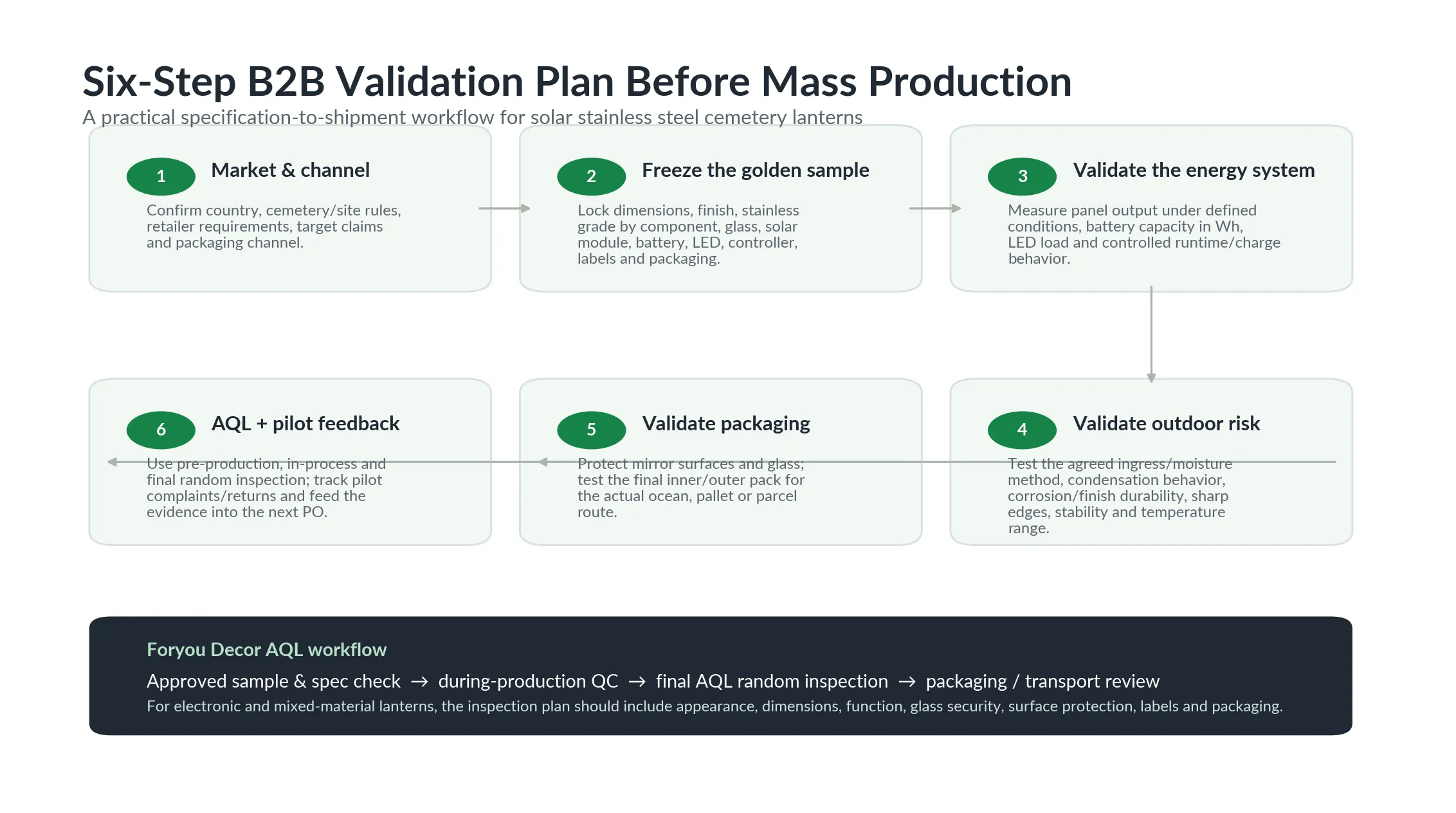 Figure 5. Six-step validation workflow from market definition to AQL and pilot feedback.
File / record | What it should contain | Why it matters |
Golden sample & signed specification | Photos, dimensions, finish, component/material map, electrical BOM, labels and packaging. | Stops silent changes between sampling and mass production. |
Energy-system test record | Panel condition/output, battery Wh, LED load, controller mode, charge/runtime test condition and results. | Makes runtime claims reproducible. |
Outdoor-risk validation | Agreed ingress/moisture method, condensation observation, corrosion/finish checks, stability and sharp-edge review. | Reduces outdoor complaint risk. |
Compliance scope matrix | Destination, role, applicable laws/standards, required technical documents, labels/marks and responsible party. | Prevents “certificate folder” compliance gaps. |
Packaging specification | Inner protection, master carton, glass/surface protection, barcode/marks, material weights and channel test. | Controls breakage, scratch and EPR data quality. |
Inspection plan | AQL level, defect classification, critical function points, sample sizes and release authority. | Turns quality acceptance into an agreed decision rule. |
Foryou Decor’s current company profile states that the business has operated since 2005, serves 66 countries, develops more than 200 new designs annually, maintains a 2,000+ sqm Shanghai showroom and a collection of more than 10,000 product models. Its product categories include cemetery lanterns, solar lanterns and stainless-steel lanterns, while its AQL service is structured for B2B order control. [2][3]
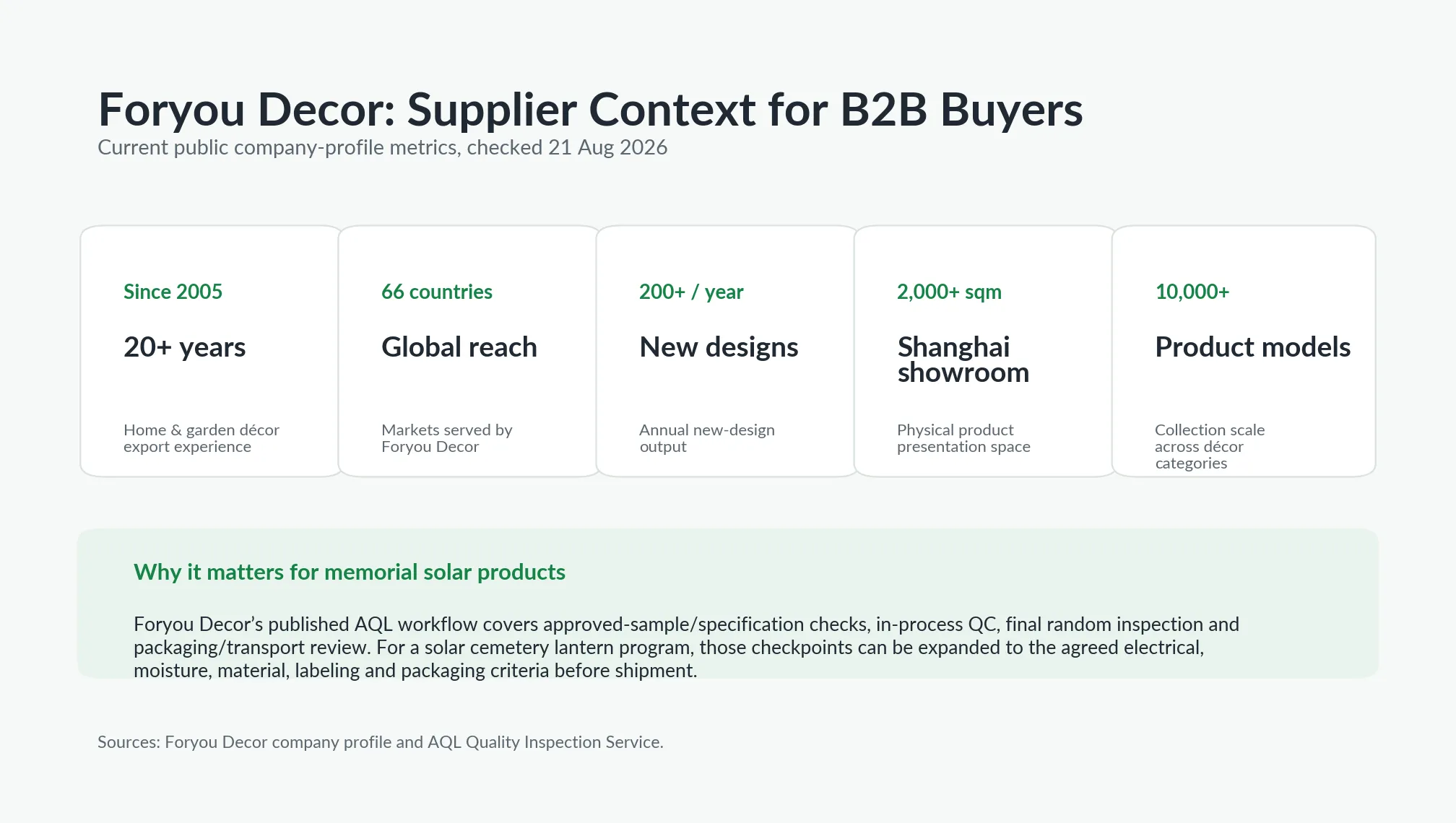 Figure 6. Foryou Decor public company-profile metrics and quality-control context.
For memorial solar products, this breadth is useful only if it is converted into a disciplined SKU-development process. Buyers should use Foryou Decor’s design and sourcing capacity to develop market-specific variants, but keep the golden sample, electrical BOM, compliance scope and packaging file tightly controlled.
It can be technically possible, but it is a poor default sourcing assumption. Germany and the USA differ in cemetery-use context, channel rules, documentation and packaging risk. Start from one hardware platform if efficient, then freeze separate market specifications and claims.
No. CE is not a single certificate or EU approval. A manufacturer must identify the EU harmonisation legislation that applies to the final product and complete the relevant conformity work. A Germany program can also involve GPSR, RoHS, EMC, WEEE/ElektroG, battery and packaging responsibilities depending on the final SKU and economic-operator role.
Not automatically. FCC obligations depend on the final electronics and whether the device falls within Part 15 equipment-authorization rules. The final circuit should be reviewed rather than applying a blanket “FCC certified” claim to every solar lantern.
Rules vary. Some VA national cemeteries explicitly prohibit solar or battery-powered lights, including Fort Logan and Calverton. Buyers should verify the exact cemetery, memorial park or retailer policy before positioning the product for grave use.
No. Runtime and recharge behavior depend on the solar panel, available light, battery usable energy, LED load, controller losses, temperature and charge algorithm. The panel, battery, LED and electronics should be specified and tested as one energy system.
At minimum: a frozen golden sample, component-level material map, panel output data, battery chemistry/voltage/capacity in Wh, LED load, controlled runtime and charge test conditions, target moisture/ingress method, packaging specification, required labels, and market-specific compliance documentation.
Foryou Decor currently lists ML-6004 as a stainless-steel and glass solar memorial cemetery lantern measuring 13 × 13 × H21 cm. The page lists 12 pieces per outer carton, an outer carton of 58 × 54 × 24 cm, and published loading quantities of 4,392 pieces in a 20GP, 9,096 in a 40GP and 10,380 in a 40HQ. Final order specifications should be reconfirmed before production.
Foryou Decor’s broader cemetery-lantern range and company materials support OEM/ODM development, finish and pattern changes, solar/LED structures, localized memorial elements and customized packaging. Every electrical, material and compliance specification should still be confirmed at SKU level before mass production.
Germany and the USA are both relevant remembrance markets, but the opportunity is not captured by copying one “best-selling” solar grave lantern into two countries. Germany needs a product file that can withstand winter-performance scrutiny and the EU/German compliance stack. The U.S. needs channel and cemetery-policy validation before the product is even described as a grave light, followed by electronics, battery and packaging checks that match the chosen channel.
Foryou Decor ML-6004 gives buyers a concrete stainless-steel-and-glass solar memorial platform to start from. The commercial advantage comes from what happens next: define the market, freeze the system, validate outdoor risks, map compliance, protect the product in transit, inspect mass production and use pilot feedback to improve the second order.
Request a market-specific specification review When contacting Foryou Decor, send the destination country, sales channel, intended cemetery/memorial use, target finish, LED effect, battery preference, packaging channel, annual quantity and any retailer compliance manual. The team can then review the base product and identify which parameters should be customized or verified before quotation and sampling. |


 English
 français
 Deutsch
 italiano
 русский
 العربية
 Türkçe
 čeština
 dansk
dansk Suomi
Suomi Polska
 magyar
 Svenska
 norsk
norsk română
 slovenský